
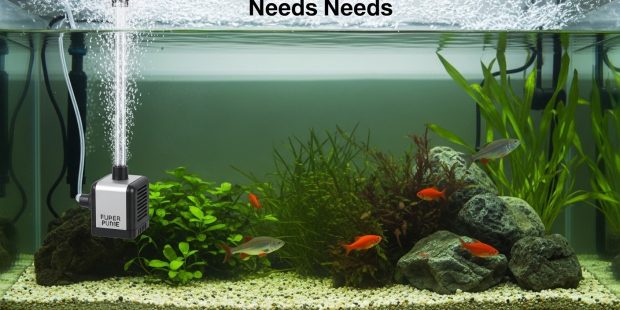
An air pump increases oxygen for fish tank environments by improving water circulation and surface agitation, helping fish breathe and supporting beneficial bacteria.
Fish don’t breathe air the way humans do. They extract dissolved oxygen from water through their gills. That oxygen must be constantly replenished. In a closed aquarium system, oxygen levels can drop quickly—especially in warm water, heavily stocked tanks, or poorly circulated setups.
An aquarium air pump pushes air through tubing into an air stone or sponge filter. This creates bubbles. The bubbles rise. Surface agitation increases. Gas exchange improves. Carbon dioxide escapes. Fresh oxygen dissolves into the water.
Without proper aquarium aeration, fish may gasp at the surface, become lethargic, or suffer stress-related illness. According to aquaculture studies, dissolved oxygen levels below 5 mg/L can cause measurable stress in many freshwater species. Below 3 mg/L, mortality risk increases sharply.
If you want stable water parameters, active fish, and fewer health problems, aeration is not optional. It is a core part of tank management.
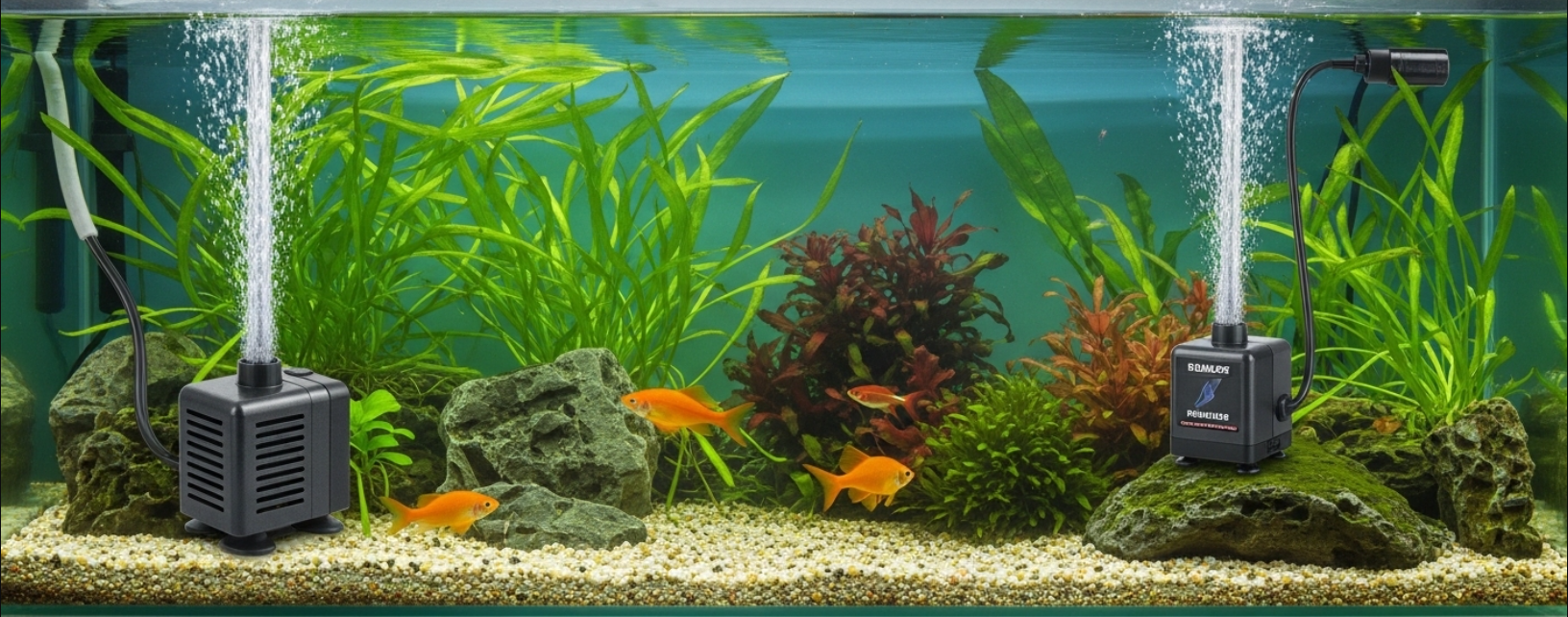
How Do Fish Breathe in an Aquarium?
Short answer: Fish breathe by passing water over their gills, extracting dissolved oxygen needed for metabolism.
Fish breathing depends entirely on dissolved oxygen (DO). When water passes over the gill filaments, oxygen diffuses into the bloodstream while carbon dioxide diffuses out.
Several factors affect oxygen for fish tank environments:
- Water temperature (warm water holds less oxygen)
- Stocking density (more fish = higher oxygen demand)
- Organic waste and decay
- Plant respiration at night
- Water movement and surface agitation
In natural lakes and rivers, wind, flowing water, and aquatic plants maintain oxygen levels. In a glass tank, those natural processes are limited. That is why mechanical aeration matters.
When oxygen levels drop, fish show clear symptoms:
- Gasping at the surface
- Rapid gill movement
- Reduced appetite
- Clamped fins
- Increased disease susceptibility
An air pump directly addresses this problem by enhancing gas exchange efficiency.
What Are the Aquarium Aeration Benefits?
Short answer: Aquarium aeration benefits include improved oxygen levels, better biological filtration, waste breakdown support, and reduced fish stress.
Let’s break down the key benefits.
1. Increased Dissolved Oxygen
The primary role of an air pump is boosting oxygen saturation. Properly aerated tanks typically maintain 6–8 mg/L dissolved oxygen, which supports most tropical species.
2. Improved Biological Filtration
Beneficial nitrifying bacteria convert ammonia into nitrite and then nitrate. These bacteria require oxygen to function. In low-oxygen tanks, the nitrogen cycle becomes unstable.
Case data from controlled aquarium setups show that tanks with continuous aeration processed ammonia 20–30% faster compared to low-flow setups.
3. Better Waste Breakdown
Organic waste decomposes through aerobic bacteria. Without oxygen, anaerobic bacteria may dominate, producing harmful compounds like hydrogen sulfide.
4. Temperature Stratification Prevention
In larger aquariums, water layers can form. Aeration promotes mixing, keeping temperature and oxygen evenly distributed.
5. Support During Emergencies
Power filter failure? Medication reducing oxygen levels? High summer heat? An air pump becomes a backup life-support system.
Is an Air Pump Necessary If You Already Have a Filter?
Short answer: Not always—but in many cases, yes. Filters move water, but they do not always provide sufficient oxygen for fish tank stability.
Some hang-on-back (HOB) filters create surface agitation. Canister filters often do not unless adjusted properly. Heavily planted tanks may not need strong aeration during daylight but can experience oxygen drops at night.
Here is a simple comparison:
| Scenario | Air Pump Needed? |
|---|---|
| Lightly stocked tank with strong surface agitation | Optional |
| Heavily stocked community tank | Recommended |
| Warm water (above 28°C / 82°F) | Recommended |
| Breeding tank or fry tank | Highly recommended |
| During medication treatment | Essential |
The decision depends on bioload, temperature, and water movement—not assumptions.
What Happens If a Fish Tank Has Low Oxygen?
Short answer: Low oxygen leads to stress, weakened immunity, and potential fish death.
Oxygen depletion can occur quickly at night, during algae blooms, or in overstocked tanks. When dissolved oxygen drops below 4 mg/L:
- Fish metabolism slows
- Ammonia toxicity increases
- Immune response weakens
- Sudden fish loss becomes possible
In aquaculture research, oxygen depletion events are one of the top causes of mass mortality. Even in home aquariums, unnoticed oxygen crashes are common after power outages.
An air pump adds a layer of safety. It stabilizes oxygen levels during fluctuations.
How Does an Air Pump Improve the Nitrogen Cycle?
Short answer: It supplies oxygen to nitrifying bacteria, which convert toxic ammonia into safer compounds.
The nitrogen cycle is central to aquarium health:
- Fish produce ammonia.
- Bacteria convert ammonia to nitrite.
- Other bacteria convert nitrite to nitrate.
Both bacterial stages require oxygen. Without adequate aeration, ammonia spikes become more likely.
In sponge filter systems, the air pump directly powers filtration. Air pulls water through the sponge. This creates both mechanical and biological filtration.
No oxygen means no efficient nitrification. That means unstable water parameters.
Do All Fish Species Require High Aeration?
Short answer: No, but most aquarium fish benefit from moderate oxygen levels.
Species differences matter.
- Betta fish can breathe atmospheric air using a labyrinth organ, but still require oxygenated water.
- Goldfish produce heavy waste and need strong aeration.
- Discus prefer stable, well-oxygenated environments.
- Cold-water species demand higher dissolved oxygen.
Even labyrinth fish suffer stress in stagnant water. Aeration improves overall tank health regardless of species.
Can Too Much Aeration Harm Fish?
Short answer: Excessive turbulence can stress certain species, but oxygen saturation itself is rarely harmful.
Problems arise when water movement is too strong for slow-swimming fish. Long-finned species may struggle in heavy currents.
However, true oxygen oversaturation is rare in standard home aquariums. Most tanks operate below full saturation levels.
The solution is control. Use adjustable air valves. Balance movement with fish comfort.
How Do You Choose the Right Air Pump for Your Aquarium?
Short answer: Match pump capacity to tank size and bioload.
Selection factors:
- Tank volume (liters or gallons)
- Depth (deeper tanks need stronger pumps)
- Number of air-driven devices
- Noise level
- Energy efficiency
General guideline:
- Up to 20 gallons: small single-outlet pump
- 20–50 gallons: medium dual-outlet pump
- 50+ gallons: high-output pump
Always check manufacturer airflow ratings (liters per hour).
Conclusion: Is an Air Pump Worth It for Healthy Fish?
Yes. If you care about fish breathing, stable water quality, and long-term tank success, an air pump is a low-cost investment with high impact.
Most fish health problems trace back to water quality instability. Aeration directly improves that stability.
Do not wait until fish gasp at the surface. Add controlled aeration now. Test dissolved oxygen if possible. Observe fish behavior daily.
Action step: Evaluate your current tank setup today. If surface movement is weak or stocking is high, install an air pump. Your fish depend on it.
Frequently Asked Questions (FAQs)
1. Does an air pump add oxygen directly?
No. The bubbles themselves do not dissolve significant oxygen. The key benefit comes from surface agitation, which improves gas exchange.
2. Should an air pump run 24/7?
In most tanks, yes. Continuous aeration ensures stable oxygen levels, especially at night.
3. Can plants replace an air pump?
Plants produce oxygen during daylight but consume oxygen at night. They cannot fully replace mechanical aeration in stocked tanks.
4. How do I know if my fish need more oxygen?
Watch for surface gasping, rapid gill movement, or lethargy. Testing dissolved oxygen provides accurate confirmation.
5. Is aeration necessary in cold-water tanks?
Yes. Cold water holds more oxygen, but active species like goldfish consume high amounts.
6. Can I use multiple air stones?
Yes. Distributing air stones improves circulation and oxygen distribution in larger tanks.
7. Does medication reduce oxygen levels?
Some treatments lower dissolved oxygen. Extra aeration during treatment is recommended.
Related Topics: Are Pre-Assembled Skateboards Good for Beginners?
What Next: How to Choose Comfortable Running Shoes for Men and Women
