
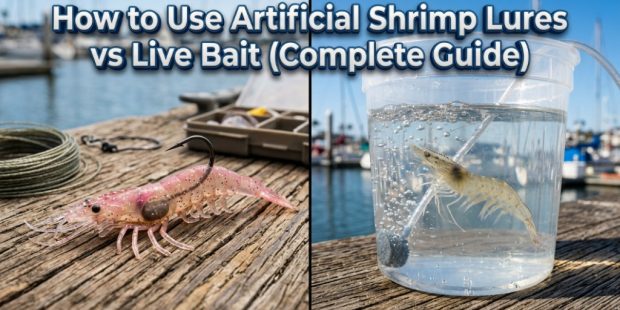
Artificial bait vs live bait: artificial shrimp lures are reusable, durable, and designed to mimic real prey, while live bait offers natural scent, movement, and higher immediate attraction for fish.
Why Choosing the Right Bait Matters
If your fishing trips feel inconsistent—some days full of bites, other days completely dead—the problem often isn’t your location or skill. It’s your bait choice. The debate around artificial bait vs live bait is one of the biggest factors separating average anglers from consistently successful ones.
Artificial shrimp lures promise convenience, reusability, and strategic control. Live bait offers realism, scent, and instinctive attraction. Choosing the wrong one can mean wasted hours, missed strikes, and frustration.
At its core, artificial shrimp lures are man-made imitations designed to replicate shrimp behavior, while live bait uses real organisms to trigger feeding instincts. Both work—but not in the same situations.
This guide breaks down when to use each, how to maximize effectiveness, and how to make smarter bait decisions based on real-world fishing conditions.
When should you use artificial shrimp lures instead of live bait?
Use artificial shrimp lures when you need control, durability, and the ability to cover more water quickly.
Artificial shrimp lures shine in active fishing situations where movement and presentation matter more than scent. These lures are especially effective for species like redfish, speckled trout, and snook.
Key advantages of artificial shrimp lures
- Reusable: One lure can last multiple trips
- Precision control: You control depth, speed, and movement
- Search efficiency: Cover large areas quickly
- No maintenance: No need to keep bait alive
Best scenarios for artificial shrimp
- Clear water conditions where fish rely on sight
- Active feeding periods (morning and evening)
- Shallow flats and grass beds
- When targeting aggressive predators
Example: In coastal flats, anglers using artificial shrimp lures often locate fish faster because they can continuously cast and retrieve, unlike live bait fishing which requires waiting.
When is live bait more effective than artificial lures?
Live bait is more effective when fish are inactive, pressured, or feeding cautiously.
Live shrimp or other bait produce natural scent, subtle movement, and realism that artificial lures cannot fully replicate.
Key advantages of live bait
- Natural scent: Triggers feeding instincts
- Realistic movement: No imitation required
- Higher success for beginners: Less technique-dependent
- Effective in tough conditions: Cold water or high pressure
Best scenarios for live bait
- Muddy or low-visibility water
- Cold weather when fish are sluggish
- Heavily fished areas
- Deep water fishing
Studies and angler reports suggest live bait can increase catch rates by up to 2–3x in low-activity conditions, especially for species like snapper and grouper.
How do artificial shrimp lures actually work?
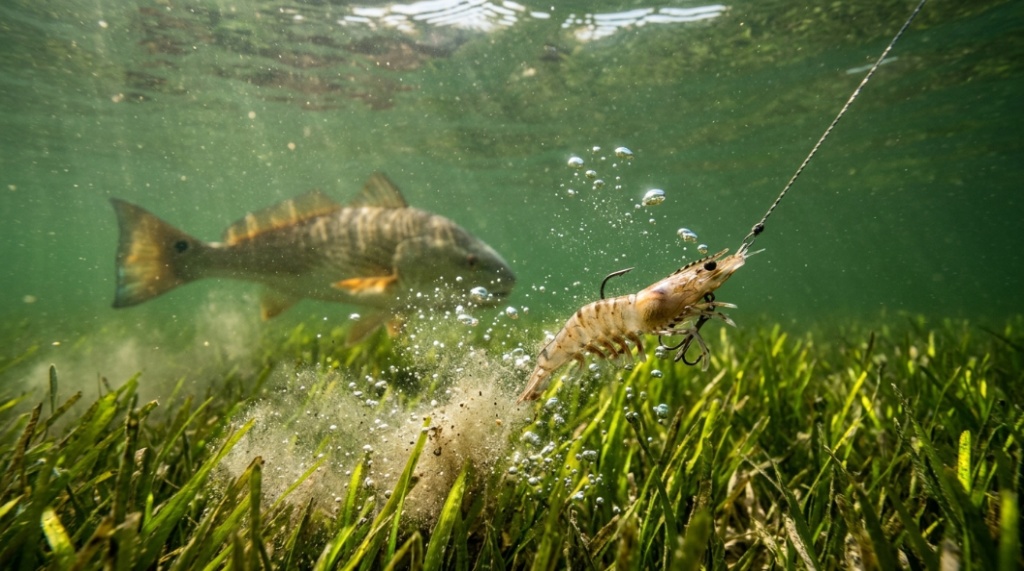
Artificial shrimp lures work by mimicking the movement, shape, and behavior of real shrimp to trigger predatory strikes.
Modern lures use soft plastics, realistic colors, and weighted designs to simulate shrimp actions like darting, hopping, and gliding.
Common lure actions
- Hopping along the bottom
- Slow swimming retrieves
- Sudden darting motions
- Suspending in the water column
The effectiveness depends heavily on how you retrieve the lure. Poor technique can make even the best lure ineffective.
Do artificial lures catch as many fish as live bait?
Yes—but only when used correctly and in the right conditions.
Artificial lures can match or outperform live bait when fish are actively feeding. However, they require skill, timing, and understanding of fish behavior.
Experienced anglers often prefer artificial lures because they:
- Increase efficiency
- Reduce dependency on bait supply
- Allow strategic fishing patterns
Beginners, however, often see better early results with live bait.
Artificial bait vs live bait: which is better overall?
Neither is universally better—the best choice depends on conditions, target species, and your fishing style.
| Factor | Artificial Shrimp Lures | Live Bait |
|---|---|---|
| Cost | Higher upfront, reusable | Ongoing cost |
| Ease of Use | Requires skill | Beginner-friendly |
| Effectiveness | High in active conditions | High in all conditions |
| Maintenance | None | Requires care |
| Versatility | Very high | Limited |
How do you fish with artificial shrimp lures effectively?
Use a slow, natural retrieve that mimics real shrimp movement.
Step-by-step technique
- Cast near structure (grass, rocks, docks)
- Let the lure sink naturally
- Use small hops with pauses
- Watch your line for subtle strikes
Fish often strike during the pause, not the movement.
What colors and sizes work best for shrimp lures?
Match lure color and size to water clarity and natural prey.
Color selection guide
- Clear water: Natural colors (brown, прозрачный, pink)
- Muddy water: Bright colors (chartreuse, white)
- Night fishing: Dark silhouettes (black, purple)
Size tips
- 2–3 inches: small fish, finesse fishing
- 3–4 inches: general use
- 4+ inches: targeting larger predators
Can you combine artificial and live bait?
Yes—using both can maximize your success in changing conditions.
Many anglers start with artificial lures to locate fish, then switch to live bait for guaranteed hookups.
This hybrid approach is especially effective in tournaments and unfamiliar waters.
Is artificial bait more eco-friendly than live bait?
Artificial lures reduce the need for harvesting live organisms but can contribute to plastic waste if lost.
Live bait can impact local ecosystems if overused, while artificial lures contribute to environmental pollution if not managed properly.
Responsible fishing practices matter more than bait choice.
Conclusion: Which Should You Choose?
The debate around artificial bait vs live bait isn’t about choosing one forever—it’s about using the right tool at the right time.
Artificial shrimp lures give you control, efficiency, and long-term value. Live bait offers unmatched realism and reliability in tough conditions.
If you want consistency, learn both. Start with artificial to find fish. Switch to live bait when conditions demand it.
The anglers who catch the most fish aren’t loyal to one method—they adapt.
Next step: On your next trip, test both approaches side by side. Track results. Adjust based on conditions. That’s how you level up fast.
FAQ: Artificial Bait vs Live Bait
Is artificial bait harder to use than live bait?
Yes, artificial bait requires more skill because you must create the movement yourself.
Does live bait always catch more fish?
No, live bait is better in slow conditions, but artificial can outperform it when fish are active.
What fish respond best to shrimp lures?
Species like redfish, trout, snook, and flounder respond very well to shrimp imitations.
How long do artificial shrimp lures last?
They can last multiple trips depending on quality and usage.
Is live bait worth the extra cost?
Yes, especially in difficult fishing conditions where realism matters.
Can beginners use artificial lures successfully?
Yes, but there is a learning curve compared to live bait.
What’s the biggest mistake with artificial lures?
Retrieving too fast—most shrimp move slowly and naturally.
📌 Related Reads
👉 Explore wear geometric gucci sunglasses fashionably
👉 Learn how to find the best led lights for reef tanks in 2026
