
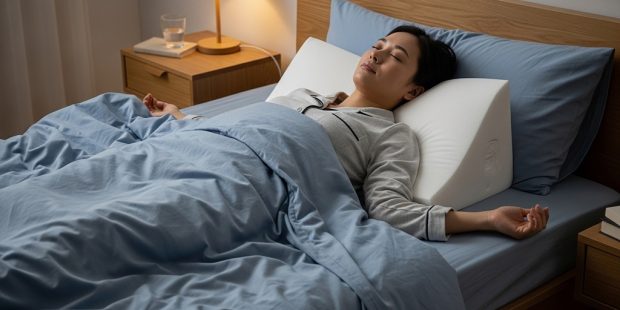
If you wake up tired even after a full night in bed, your sleeping position may be part of the problem. A wedge pillow is a simple positional therapy tool that elevates the upper body to help keep airways open during sleep. Many people use it as one of the most practical sleep apnea pillow alternatives to improve breathing without relying only on machines.
Sleep apnea causes repeated breathing interruptions at night. These pauses reduce oxygen levels and disturb deep sleep cycles. A wedge pillow changes body alignment by lifting the head and torso between 30 and 45 degrees. This position reduces airway collapse and supports smoother airflow.
Clinical sleep studies have shown that positional therapy can significantly reduce apnea episodes in people with mild to moderate obstructive sleep apnea. While it does not replace medical treatment for severe cases, it can improve comfort, reduce snoring, and support better oxygen flow naturally.
This guide explains how wedge pillows work, who benefits most from them, and how to use them effectively as part of a natural sleep apnea support strategy.
Why Does Sleep Apnea Happen During Sleep?
Short answer: Sleep apnea happens when throat muscles relax and block airflow during sleep.
Obstructive sleep apnea (OSA) occurs when soft tissues in the throat collapse and narrow the airway. This blockage interrupts breathing repeatedly throughout the night.
Common causes include:
- Sleeping flat on your back
- Excess neck tissue
- Weak airway muscle tone
- Nasal congestion
- Alcohol before bedtime
- Weight gain
A report from the American Academy of Sleep Medicine estimates that nearly 1 billion adults worldwide experience some form of sleep apnea. Many remain undiagnosed.
When airflow stops, the brain briefly wakes the body to restart breathing. These micro-awakenings prevent deep restorative sleep.
This is why positional therapy tools like wedge pillows can help. Elevation reduces airway pressure and improves breathing stability.
How Does a Wedge Pillow Help Reduce Sleep Apnea Symptoms?
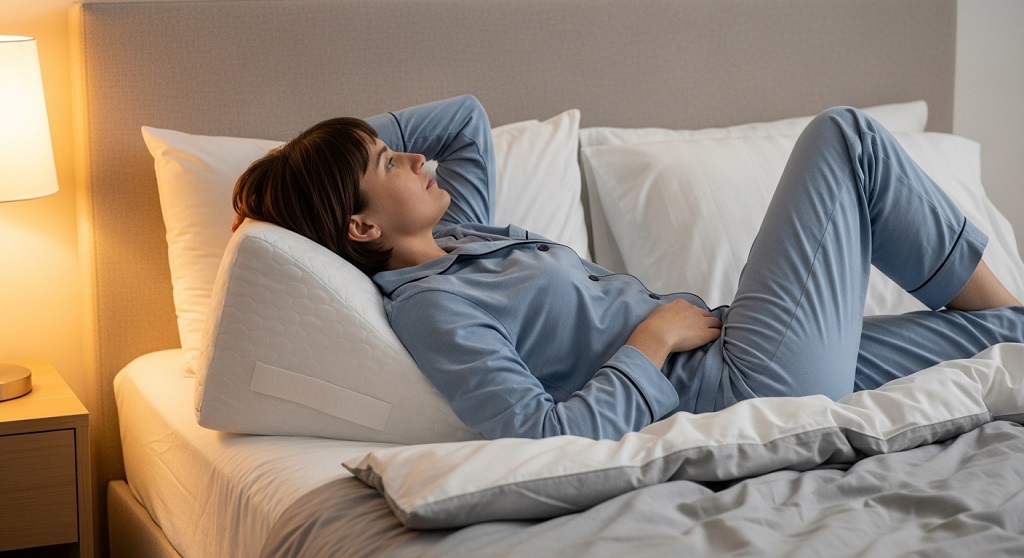
Short answer: A wedge pillow supports airway alignment by elevating the upper body, reducing airway collapse during sleep.
A wedge pillow lifts the torso instead of just the head. This distinction matters. Regular pillows bend the neck forward, which can worsen breathing restriction.
Elevation from a wedge pillow:
- Prevents tongue from falling backward
- Reduces throat tissue collapse
- Improves oxygen intake
- Supports nasal airflow
- Decreases snoring intensity
A positional therapy study published in the Journal of Clinical Sleep Medicine found that sleeping at an incline reduced apnea events by up to 50% in position-dependent patients.
This makes wedge pillows one of the most practical non-CPAP sleep apnea pillow alternatives for daily use.
Who Should Consider Using a Wedge Pillow for Sleep Apnea?
Short answer: People with mild to moderate obstructive sleep apnea often benefit most from wedge pillow therapy.
Not every sleep apnea case is the same. Severity determines treatment strategy.
| Sleep Apnea Severity | Recommended Support |
|---|---|
| Mild | Positional therapy and lifestyle changes |
| Moderate | Combination therapy including wedge pillow support |
| Severe | Medical devices like CPAP remain essential |
People who benefit most include:
- Back sleepers with airway collapse
- Snorers with interrupted breathing
- Individuals with acid reflux and apnea overlap
- Travelers needing portable sleep apnea support
- CPAP users seeking additional comfort
Many patients combine positional therapy with other natural adjustments for stronger results.
Can a Wedge Pillow Replace a CPAP Machine?
Short answer: A wedge pillow cannot replace CPAP for severe sleep apnea but can support mild cases or improve comfort alongside treatment.
Continuous Positive Airway Pressure (CPAP) machines remain the gold standard for moderate to severe OSA. However, long-term compliance remains a challenge.
Research published in Sleep Health reports that nearly 46% of CPAP users stop consistent use within the first year.
This is where wedge pillows help.
They provide:
- Improved comfort during sleep
- Reduced pressure on airways
- Better mask tolerance
- Lower snoring intensity
Instead of replacing CPAP, many patients use wedge pillows as a complementary solution.
What Makes Wedge Pillows Effective Sleep Apnea Pillow Alternatives?
Short answer: Wedge pillows improve airway position naturally without electricity, tubing, or noise.
Compared with mechanical devices, wedge pillows offer a simple solution.
Key advantages include:
- No setup required
- No maintenance costs
- No mask discomfort
- No noise disruption
- Travel-friendly design
Positional therapy is often recommended as a first step before advanced treatment in mild cases.
Unlike stacked pillows, wedge pillows maintain consistent elevation throughout the night.
How High Should a Wedge Pillow Be for Sleep Apnea Support?
Short answer: A wedge pillow height between 7 and 12 inches is typically most effective.
The correct elevation angle improves breathing without straining the neck.
General recommendations:
- 7 inches for mild snoring
- 10 inches for moderate apnea symptoms
- 12 inches for combined reflux and apnea
Clinical positional therapy trials suggest that a 30–45 degree incline produces the best airway stability.
Choosing the right height depends on body structure and sleeping habits.
How Should You Sleep on a Wedge Pillow for Best Results?
Short answer: Sleep with your back fully supported from hips to head on the wedge surface.
Incorrect positioning reduces effectiveness.
Follow these steps:
- Place the wedge under your upper torso
- Keep spine aligned naturally
- Avoid bending only the neck upward
- Use side sleeping when possible
- Keep shoulders supported on the slope
Consistency improves results over time.
Most users report noticeable breathing improvement within two weeks of regular use.
What Other Natural Strategies Work Well with a Wedge Pillow?
Short answer: Combining positional therapy with lifestyle adjustments improves long-term sleep apnea outcomes.
A wedge pillow works best as part of a broader routine.
Evidence-based strategies include:
- Weight management
- Nasal breathing support
- Reducing alcohol before bedtime
- Side sleeping habits
- Regular sleep schedules
A Harvard Medical School review found that losing just 10% of body weight can reduce apnea severity by up to 26% in overweight individuals.
This makes wedge pillows especially effective when combined with behavioral improvements.
Is There Clinical Evidence Supporting Positional Therapy for Sleep Apnea?
Short answer: Yes, clinical studies confirm positional therapy reduces apnea events in position-dependent patients.
A controlled trial in the Journal of Clinical Sleep Medicine showed that positional therapy lowered apnea-hypopnea index (AHI) scores in adults who experienced symptoms primarily while sleeping on their backs.
Another European Respiratory Society review reported that positional therapy improved oxygen saturation and reduced snoring frequency.
These findings support wedge pillows as practical sleep apnea pillow alternatives for selected patients.
Can a Wedge Pillow Improve Snoring Linked to Sleep Apnea?
Short answer: Yes, elevation reduces airway vibration and lowers snoring intensity.
Snoring happens when airflow meets resistance in narrowed passages.
Upper body elevation:
- Opens nasal passages
- Stabilizes tongue position
- Reduces throat vibration
- Improves breathing rhythm
Partners often report noticeable snoring reduction within the first week of wedge pillow use.
Are There Any Risks or Limitations When Using a Wedge Pillow?
Short answer: Wedge pillows are safe for most users but may require adjustment time.
Common temporary challenges include:
- Neck stiffness during early use
- Sliding down the pillow surface
- Incorrect height selection
These issues usually resolve within days.
However, individuals with severe spinal conditions should consult a medical professional before starting positional therapy.
How Do You Choose the Right Wedge Pillow for Sleep Apnea?
Short answer: Choose a wedge pillow with proper height, firm support, and breathable material.
Important features to consider:
- Memory foam support structure
- Washable cover
- Non-slip base
- Gradual incline shape
- Medical-grade foam density
Higher-density foam maintains elevation consistency across the night.
This ensures long-term airway alignment support.
Conclusion: Can a Wedge Pillow Support Sleep Apnea Naturally?
A wedge pillow offers a simple and practical way to support breathing during sleep. By elevating the upper body, it helps reduce airway collapse, improve oxygen flow, and decrease snoring frequency. For people with mild or position-dependent obstructive sleep apnea, this approach can make a noticeable difference in sleep quality.
Unlike complex devices, wedge pillows require no setup and integrate easily into daily routines. Clinical research supports positional therapy as an effective strategy for selected patients. When combined with healthy sleep habits and lifestyle adjustments, results improve even further.
If you are looking for reliable sleep apnea pillow alternatives that support natural breathing, a wedge pillow is a strong starting point. Try using one consistently for two weeks and observe changes in sleep comfort, energy levels, and nighttime breathing stability.
Better sleep starts with better positioning. Begin optimizing your sleep environment today.
Frequently Asked Questions About Wedge Pillows for Sleep Apnea
Can a wedge pillow cure sleep apnea?
No. A wedge pillow does not cure sleep apnea. It supports airway positioning and reduces symptoms, especially in mild cases or position-dependent apnea.
How long does it take to see results from a wedge pillow?
Many users notice reduced snoring and improved breathing within one to two weeks of consistent use.
Is side sleeping better than back sleeping with a wedge pillow?
Yes. Side sleeping combined with elevation produces stronger airway stability compared with back sleeping alone.
Can wedge pillows help with both acid reflux and sleep apnea?
Yes. Elevation prevents stomach acid movement and keeps airways open, making wedge pillows useful for people experiencing both conditions.
What size wedge pillow works best for sleep apnea?
A wedge pillow between 7 and 12 inches high works best for most adults depending on symptom severity and comfort preference.
Are wedge pillows safe for everyday use?
Yes. Most people can use wedge pillows nightly without issues once they adjust to the elevation angle.
Can wedge pillows replace lifestyle changes for sleep apnea?
No. They work best alongside weight management, sleep position adjustments, and healthy bedtime routines.
Read More Also: How to Wear Geometric Gucci Sunglasses Fashionably
Discover More: How to Find the Best Crossbody Bags on a Budget
