
Most bike thefts are not sophisticated operations. They are crimes of opportunity committed by someone who spotted an easy target and acted in under a minute. That reality is actually good news, because it means you can significantly reduce your risk without spending a fortune. The key is understanding what makes a bike look worth stealing and what makes a thief move on to the next rack. From lock choice and locking technique to where you park and how your bike looks, the details matter more than most riders realize. A quality lock like the ones reviewed at OutdoorXSports is a solid starting point, but the full strategy goes well beyond the lock itself.
Quick Answer
Make your bike less attractive to thieves by using a high-quality lock, locking the frame and wheels to a fixed object, parking in visible and busy locations, removing or securing quick-release components, and avoiding habits that signal a predictable routine. Thieves look for easy, low-risk targets. Anything that increases the time, noise, or attention required to steal your bike makes it a worse target than the bike parked next to it.
Key Takeaways
- Thieves prioritize ease and speed, so your goal is to make your bike slower and riskier to steal than nearby alternatives.
- Lock the frame and at least one wheel to a fixed object, and fill the lock’s internal space so a jack or lever cannot be inserted.
- Park in high-visibility, high-traffic areas, and vary your parking spots and times when possible.
- Secure or replace quick-release parts, because wheels, seats, and accessories are frequently stolen even when the frame stays locked.
- How your bike looks matters. A clean, expensive-looking bike with brand-name components draws more attention than a scuffed one with visible security markings.
Why Thieves Choose One Bike Over Another
Bike thieves make quick, practical decisions. They are not studying your bike for minutes. They are scanning for the easiest score with the lowest chance of being noticed or confronted. Understanding their decision process helps you counter it directly.
Three factors drive their choice: perceived value, security level, and exposure risk. A high-value bike with a weak lock in a dark, quiet spot is the ideal target. A modest bike with a strong lock in a busy, well-lit area is a poor target. You cannot always change your bike’s value, but you can influence the other two factors substantially.
Opportunistic thieves often carry only basic tools like bolt cutters or a small pry bar. Professional thieves may carry angle grinders and work in teams. No lock stops a determined professional with the right tools and enough time. But most thefts are not committed by professionals. They are committed by opportunists who will skip your bike if it looks like more trouble than it is worth.
Locking Technique Matters as Much as the Lock
A strong lock used poorly is almost as vulnerable as a cheap lock. The most common mistake is locking only the wheel or only the frame in a way that leaves the rest of the bike removable. Another common error is leaving too much empty space inside the lock, which allows a thief to insert a car jack or lever and force the lock open.
What to Lock and How
Lock the frame and at least one wheel to a fixed, immovable object. If you use a U-lock, pass it through the rear wheel, the frame’s rear triangle, and the rack or post. This secures both the frame and the rear wheel with one lock. If you use a chain or cable as a secondary lock, run it through the front wheel and connect it to the main lock.
Fill the inside of the U-lock as much as possible. A tight fit leaves no room for a jack. If the rack is thick, position the lock so the frame and wheel take up most of the internal space.
Lock Quality Basics
Not all locks offer the same resistance. U-locks made from hardened steel with a thick shackle generally resist cutting and prying better than cables or thin chains. Chain locks with hardened square links offer flexibility and can be very strong, but they are heavy. Folding locks balance portability and security but may have more points of failure. Cable locks are lightweight and convenient but are the easiest to cut and should be used only as secondary security ,For more tips on protecting your ride and gear, check out our guide on how to stay safe while bmx riding.
Where You Park Changes Everything
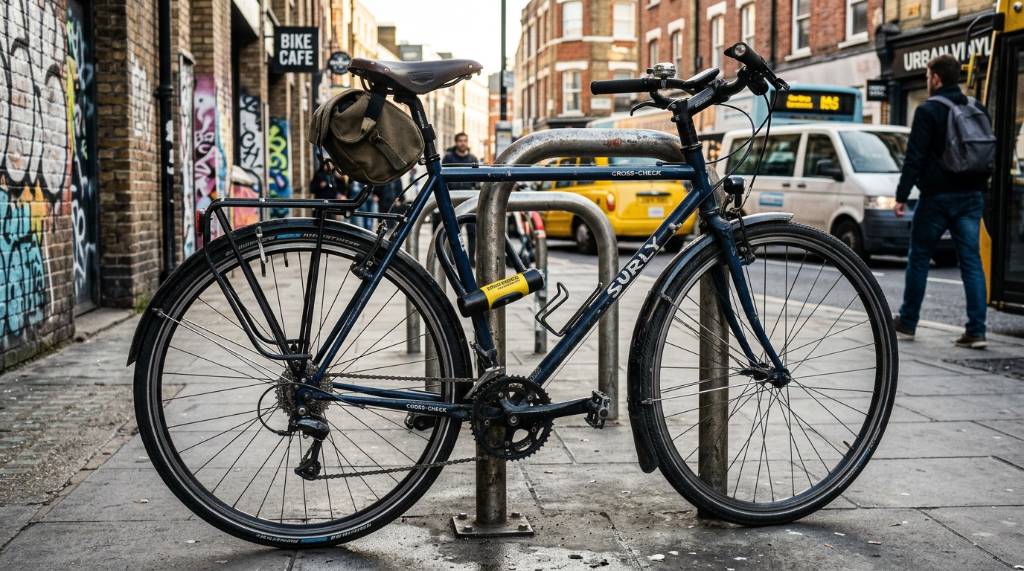
Location is one of the most powerful tools you have. Thieves avoid places where they might be seen, interrupted, or remembered. Parking in a busy, well-lit area with foot traffic and visible security cameras dramatically reduces your risk compared to a quiet side street or an isolated rack behind a building.
Choose racks that are bolted down and in good condition. A loose rack or one that can be lifted over can be defeated without touching your lock. Avoid parking next to bikes with weaker locks, because a thief may target the easiest bike first and yours may be collateral damage if they are cutting a rack or working in the area.
If you park in the same place every day, consider varying your spot and time slightly. Predictability helps thieves plan. Even small changes make you a less reliable target.
Reduce the Value Your Bike Appears to Have
Perceived value is not just about the bike’s actual price. It is about how expensive and desirable it looks at a glance. A bike with brand-name components, a clean finish, and expensive accessories signals value. A bike that looks worn, unusual, or personalized signals less value and more risk of being identified.
Practical steps include:
- Cover or remove brand decals if they advertise high-end components.
- Use a less conspicuous saddle or seat post if yours is a theft magnet.
- Remove accessories like lights, bags, and GPS mounts when you leave the bike.
- Apply visible security markings or registration stickers. These make the bike harder to resell and easier to identify.
- Let the bike look used. A scuffed frame or a bit of visible wear is not a bad thing when it comes to deterrence.
None of these steps makes your bike theft-proof, but they reduce the odds that a thief sees it as the best target on the rack.
Secure the Parts Thieves Steal Most
Even when the frame stays locked, thieves frequently strip wheels, seats, seat posts, and accessories. Quick-release levers make this easy. Replacing quick-release skewers with locking skewers or bolt-on versions is one of the most effective low-cost upgrades you can make. The same applies to seat post clamps.
If you cannot replace the hardware, run a secondary cable or chain through the wheels and saddle and connect it to your main lock. This adds time and effort for the thief and makes your bike a less convenient target. It is not perfect, but it raises the cost of the theft.
Common Mistakes That Make Your Bike a Target
Many thefts happen because of avoidable habits. Here are the most common ones:
- Using only a cable lock as primary security. Cables are cut quickly with basic tools.
- Locking only the wheel. The frame can be lifted and removed, leaving the wheel behind.
- Locking to a weak or movable object. A signpost that can be lifted or a rack that is not bolted down offers no real security.
- Leaving the lock loose. Empty space inside a U-lock invites prying and jacking.
- Parking in the same isolated spot every day. Predictability helps thieves.
- Leaving quick-release wheels and seats unsecured. These are stolen even when the frame is locked.
- Assuming a busy area is safe. Busy areas are generally better, but thieves can work quickly in crowds too. Lock properly regardless of location.
Building a Layered Approach
The most effective strategy combines multiple deterrents rather than relying on a single measure. A strong primary lock, a secondary cable or chain for components, good parking choices, and reduced visual value together make your bike a much less appealing target.
Think of it this way: a thief compares your bike to the others nearby. If yours takes longer to steal, makes more noise, attracts more attention, and is harder to resell, the thief will choose a different bike. You do not need to make your bike impossible to steal. You need to make it less attractive than the alternatives.
No method guarantees complete protection. Determined thieves with the right tools and enough time can defeat almost any lock. Insurance, registration, and keeping a photo of your bike and its serial number are sensible backups. But for everyday riding and parking, the combination of good locking habits and smart choices dramatically reduces your risk.
Frequently Asked Questions
What kind of lock is hardest for thieves to defeat?
Hardened steel U-locks and thick hardened chain locks generally offer the highest resistance to cutting and prying. Cable locks are the easiest to defeat and should be used only as secondary security. No lock is unbeatable, but quality matters greatly.
Is it better to lock my bike in a busy area or a quiet one?
Busy, well-lit areas with foot traffic are generally safer because thieves avoid being seen or interrupted. Quiet, isolated spots give thieves more time and privacy. Visibility is a strong deterrent.
Should I remove my front wheel when locking my bike?
Removing the front wheel and locking it with the frame is one option, but it adds hassle. A better everyday approach is to use locking skewers or a secondary cable through the front wheel. This keeps the wheel secure without removing it each time.
Do bike registration and marking actually help?
They can help. Visible markings and registration make a bike harder to resell and easier to identify if recovered. They may also discourage thieves who prefer untraceable bikes. They are not a substitute for a good lock, but they add a layer of deterrence.
How long should it take a thief to break my lock?
The goal is not a specific time but relative difficulty. If your lock takes significantly longer to defeat than nearby bikes, a thief will likely move on. Most opportunistic thefts are quick, so anything that adds time and risk works in your favor.
Can I make my bike theft-proof?
No. Determined thieves with the right tools and time can defeat almost any security measure. The practical goal is to make your bike less attractive than the alternatives, reducing the likelihood that a thief chooses yours.
Conclusion
Making your bike less attractive to thieves comes down to raising the effort, risk, and inconvenience of stealing it. Use a strong lock correctly, secure your components, park in visible areas, and reduce the visual signals of value. None of these steps is complicated, and together they make a real difference. Start with the lock and locking technique, then layer on the other habits over time. The goal is not perfection. It is making your bike a worse target than the one next to it.
