
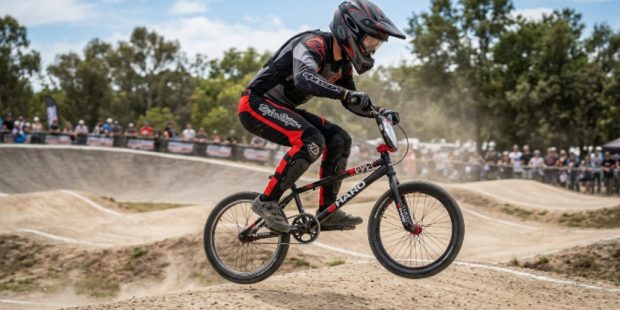
BMX riding becomes much safer when you combine proper protective gear with controlled, progressive practice. A properly fitted bicycle helmet can reduce the risk of head injury by about 50 percent. Smart preparation also helps riders manage falls, obstacles, fatigue, and unexpected mistakes before they become serious problems.
Start With Safety Before You Ride
BMX safety begins before the bike moves because preparation prevents many avoidable crashes. First, inspect your equipment, riding area, and personal readiness.
A good safety routine should take only a few minutes before each session. However, those minutes can reveal problems that could cause a painful crash.
Check these essentials before every ride:
- Helmet fit: Make sure the helmet sits level and stays secure during movement.
- Bike condition: Check the brakes, tires, wheels, pedals, chain, and handlebars.
- Riding surface: Look for loose gravel, wet patches, holes, debris, and damaged ramps.
- Protective gear: Confirm that pads, gloves, and shoes fit properly.
- Personal condition: Avoid riding when you feel unusually tired, distracted, or unwell.
Additionally, consider the difficulty of your planned session before you start. Match the terrain and tricks to your current skill level.
Wear the Right BMX Protective Gear
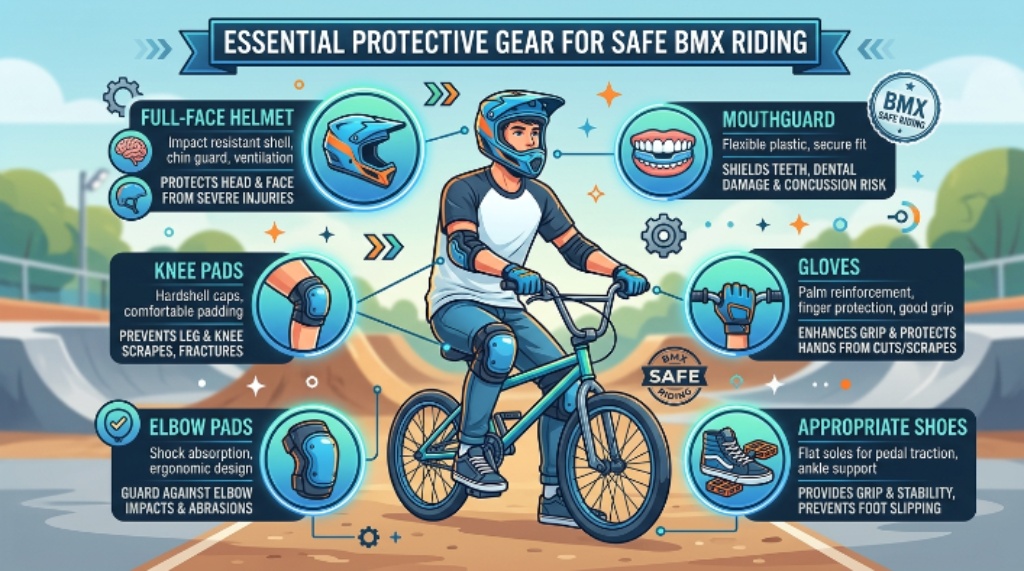
Protective equipment cannot prevent every injury, but it can reduce injury severity. Therefore, treat protective gear as part of your riding system.
Choose a Properly Fitted Helmet
A helmet remains the most important piece of BMX safety equipment. Select a certified bicycle helmet designed for the type of riding you perform.
The helmet should sit level across your forehead without blocking your vision. Furthermore, the straps should form a comfortable, secure shape around your ears.
Use this quick helmet check:
- Position: Keep the helmet level and low enough to protect your forehead.
- Movement: Shake your head gently and check whether the helmet shifts.
- Straps: Tighten the straps until they feel secure without causing discomfort.
- Buckle: Fasten the buckle completely before every ride.
- Condition: Replace the helmet after a significant impact or visible damage.
Never assume an old helmet remains safe simply because its exterior looks acceptable. Impact protection can deteriorate even when damage remains difficult to see.
Protect Your Hands
BMX riders often instinctively extend their hands during a fall. Consequently, gloves can protect your palms from abrasions and improve grip.
Choose gloves that fit snugly without restricting finger movement. Look for durable palm material, secure closures, and adequate ventilation.
Gloves also help reduce discomfort during longer riding sessions. As a result, you can maintain better control when your hands become sweaty.
Use Knee and Elbow Protection
Knee pads provide valuable protection during falls, especially while learning jumps and technical movements. Elbow pads can similarly reduce scrapes and impact injuries.
Choose pads that stay securely positioned while you move. Loose pads can shift during crashes and expose vulnerable areas.
However, avoid bulky equipment that significantly restricts your natural movement. You need enough flexibility to control the bike safely.
Wear Suitable BMX Shoes
Your shoes should provide reliable grip on the pedals. Flat soles often work well because they maintain consistent pedal contact.
Avoid loose footwear, worn soles, or shoes that allow excessive foot movement. Also, secure your shoelaces so they cannot interfere with the drivetrain.
Good footwear improves control during jumps, landings, and sudden balance corrections. Therefore, treat shoes as functional safety equipment rather than ordinary clothing.
Consider Additional Protection
Some riders benefit from additional protective equipment depending on their riding style. More aggressive riding can justify stronger protection.
Useful options include:
- Shin protection: Helps reduce injuries from pedal strikes.
- Mouth protection: Can protect teeth during certain high risk riding situations.
- Body protection: Adds coverage during racing, jumping, or technical riding.
- Eye protection: Helps block dust, debris, and insects during outdoor sessions.
Choose additional gear based on realistic risks rather than appearance. More equipment does not automatically create better protection.
Inspect Your BMX Before Every Session
A mechanically sound bike gives you a better chance of responding to unexpected situations. Therefore, develop a simple pre ride inspection routine.
Start with the tires and check their condition and pressure. Then inspect the wheels for obvious damage, looseness, or unusual movement.
Test the brakes before entering the riding area. If the braking response feels weak, inconsistent, or unusual, stop and investigate.
Next, inspect the handlebars, stem, pedals, cranks, and chain. Tighten appropriate components and replace damaged parts before riding.
Pay particular attention after hard landings or crashes. A bike can develop problems that remain difficult to notice during casual inspection.
Build Skills Before Attempting Difficult Tricks
BMX progression works best when riders master basic control before increasing difficulty. Trying advanced tricks too early often creates unnecessary risk.
First, develop reliable braking, steering, balance, and body positioning. Then practice controlled starts, stops, turns, and small hops.
Once those movements become consistent, gradually introduce more demanding techniques. This approach gives your body time to develop coordination and confidence.
Practice Falling Safely
Learning how to fall can reduce the consequences of mistakes. However, riders should practice controlled movements rather than deliberately creating dangerous crashes.
Keep your body relaxed when possible and avoid locking your arms during a fall. Protect your head and avoid using your hands as the only impact point.
Practice basic emergency movements on a safe surface with appropriate protection. Consider professional coaching if you want to learn advanced falling techniques.
Master Landing Technique
Landing errors cause many BMX injuries, particularly during jumps. Therefore, focus on controlled landings before increasing jump height.
Keep your body balanced over the bike during the landing. Bend your knees and elbows to absorb impact progressively.
Look toward your intended landing area instead of staring directly at the front wheel. Additionally, maintain control rather than chasing maximum height.
If a landing feels unstable, reduce the jump size. Repeating smaller movements builds better technique than repeatedly surviving difficult landings.
Choose a Safer Riding Environment
Your surroundings can influence crash severity just as much as your technique. Therefore, inspect every new location before starting a session.
Dedicated BMX facilities can provide predictable surfaces, designed features, and defined riding areas. However, riders still need to understand each feature before using it.
Avoid areas containing heavy traffic, unpredictable pedestrians, damaged pavement, or hidden obstacles. Wet surfaces also reduce traction and can dramatically change braking behavior.
Before using a ramp or obstacle, inspect its condition carefully. Check the approach, transition, landing area, and surrounding space.
Also, consider where you could safely stop if something goes wrong. A clear escape area can prevent one mistake from becoming a larger collision.
Control Your Speed
Speed creates momentum, and momentum reduces the time available for correction. Therefore, maintain a speed that matches your current skill and surroundings.
Beginners should prioritize control instead of maximum speed. Gradually increase speed only when braking and steering remain reliable.
Before entering a feature, understand how you will exit it. If you cannot confidently control the exit, reduce your speed or skip the feature.
Likewise, avoid racing another rider unless the environment supports safe competition. Competitive pressure can cause riders to attempt movements they have not mastered.
Learn BMX Body Position
Correct body positioning helps the bike respond more predictably. It also improves balance when the terrain changes suddenly.
Keep your knees and elbows slightly bent during normal riding. This position allows your body to absorb movement without becoming rigid.
Keep your eyes focused several feet ahead rather than directly below you. Looking ahead gives you more time to identify obstacles and adjust your line.
During jumps, maintain a centered position over the bike. Avoid making sudden body movements unless the technique specifically requires them.
Increase Difficulty Gradually
Progressive practice remains one of the most effective ways to reduce unnecessary BMX risk. Each new skill should build on movements you already control.
Use a simple progression:
- Level one: Practice balance, braking, steering, and controlled stops.
- Level two: Add small hops, turns, manuals, and basic terrain changes.
- Level three: Practice small jumps and controlled landings.
- Level four: Increase technical difficulty after repeating each movement consistently.
- Level five: Attempt advanced tricks with suitable coaching and protective equipment.
Do not measure progress only by how difficult a trick looks. Consistency, control, and safe recovery matter more than visual difficulty.
Manage Fatigue and Concentration
Fatigue changes reaction time, coordination, judgment, and balance. Therefore, continuing a session after your technique deteriorates can increase unnecessary risk.
Watch for repeated mistakes that normally do not happen. Also, notice slower reactions, poor landings, and difficulty maintaining your riding line.
Take regular breaks during longer sessions. Drink water and allow your body enough time to recover between difficult attempts.
Most importantly, stop when concentration drops significantly. Ending a session early represents good judgment, not poor riding.
Ride With Other People Wisely
Riding with others can provide support, motivation, and useful feedback. However, groups can also create distractions and collision risks.
Give other riders enough space around ramps and landing zones. Communicate clearly before entering shared riding areas.
Never assume another rider sees you. Instead, use predictable lines and clear signals whenever possible.
If you ride with experienced BMX riders, ask for technique feedback. Constructive feedback can identify mistakes that you may not notice yourself.
Know What To Do After a Crash
A crash does not always produce immediate symptoms or obvious damage. Therefore, avoid instantly returning to difficult riding after a hard impact.
First, move to a safe location if you can do so safely. Then check yourself and inspect the bike before deciding what happens next.
Look for significant pain, bleeding, unusual movement, dizziness, confusion, or other concerning symptoms. Seek appropriate medical evaluation when symptoms appear serious or persist.
Also inspect your helmet after a substantial impact. Replace it when the impact may have compromised its protective structure.
Do not let embarrassment influence your decision. A cautious response after a crash can prevent a second, more serious problem.
Create a Personal BMX Safety Routine
A consistent routine makes good decisions easier to repeat. Instead of relying on memory, create a short checklist.
Your routine can include:
- Gear: Helmet, gloves, pads, shoes, and other suitable protection.
- Bike: Tires, brakes, wheels, pedals, handlebars, chain, and fasteners.
- Location: Surface condition, obstacles, traffic, weather, and escape space.
- Skill: Planned movements that match your current ability.
- Condition: Energy level, concentration, hydration, and physical readiness.
- Exit plan: A clear understanding of where you can safely stop.
Review the checklist before every serious session. Over time, this process becomes automatic and requires very little effort.
Common BMX Safety Mistakes To Avoid
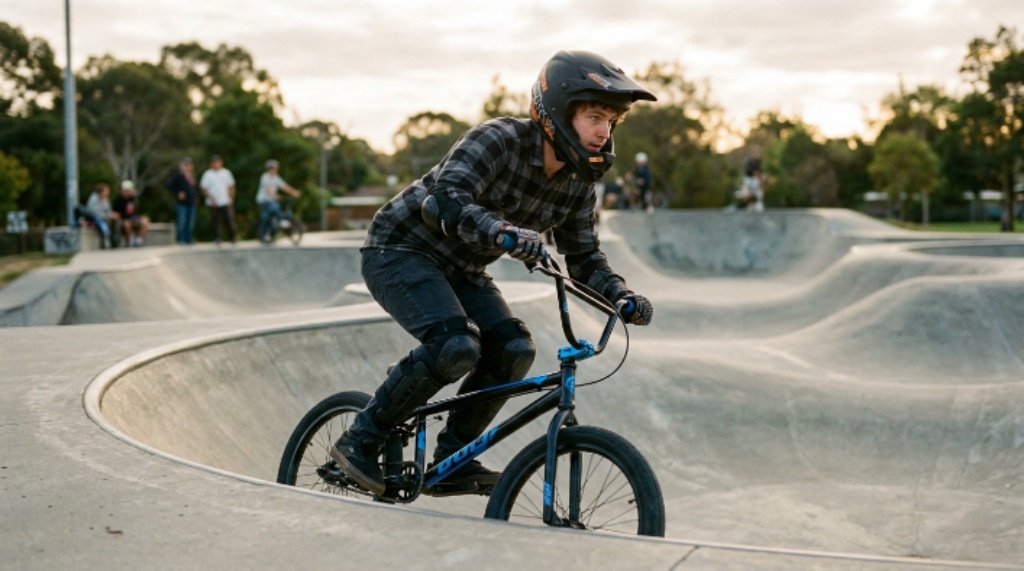
Even experienced riders can develop unsafe habits through repetition. Recognizing those habits helps prevent unnecessary injuries.
Avoid these common mistakes:
- Riding without a properly fitted helmet.
- Attempting advanced tricks without mastering basic movements.
- Ignoring unusual bike noises or loose components.
- Practicing on wet, damaged, or unpredictable surfaces.
- Continuing after serious fatigue affects technique.
- Copying another rider without understanding the required skill.
- Increasing jump height before mastering controlled landings.
- Treating protective gear as a substitute for proper technique.
Safety improves when equipment, skill, environment, and judgment work together. No single helmet or pad can compensate for reckless riding decisions.
A Simple BMX Safety Checklist
Before your next session, ask yourself five questions:
- Is my helmet fitted correctly and free from significant damage?
- Does my BMX work properly without unusual movement or mechanical problems?
- Does my riding area provide enough space and predictable surfaces?
- Am I practicing skills that match my current ability?
- Can I maintain concentration throughout the planned session?
If you cannot answer yes to each question, address the problem first. That short pause can make the difference between controlled practice and avoidable injury.
Conclusion
Safe BMX riding depends on preparation, proper protective gear, sound technique, and disciplined progression. Wear a correctly fitted helmet, protect your hands and joints, inspect your bike, and match every trick to your ability.
Start with controlled movements and increase difficulty only after consistent practice. Most importantly, respect fatigue, unfamiliar terrain, mechanical problems, and your body’s warning signs.
Your goal should not simply involve landing harder tricks. Build the control and judgment that let you ride longer, progress confidently, and return safely for your next session.
Frequently Asked Questions
Is a helmet necessary for BMX riding?
Yes, wearing a properly fitted bicycle helmet is essential because BMX riding involves frequent falls and impacts.
What protective gear should BMX beginners wear?
Beginners should wear a helmet, gloves, knee pads, elbow pads, and secure shoes with reliable pedal grip.
How can I practice BMX tricks safely?
Practice each movement at a manageable level, master its landing, and increase difficulty only after consistent control.
Should I ride BMX when I feel tired?
No, significant fatigue can reduce concentration, coordination, reaction speed, and your ability to recover from mistakes.
What should I check before every BMX ride?
Check your helmet, brakes, tires, wheels, pedals, handlebars, chain, riding surface, and personal readiness before riding.
