
You stare at your aquarium and notice one of your fish acting sluggish. The water looks clear, but something feels off. You bought the tank, added the fish, and assumed everything would just work. But now you’re realizing that keeping fish healthy requires more than just filling a glass box with water. The truth is, most aquarium problems start with poor equipment choices. Whether you are battling algae, stressed fish, or unstable water parameters, the solution often lies in selecting the right gear. This guide will show you exactly which aquarium accessories fish tank health depends on, and how to make smarter choices that keep your aquatic pets thriving.
What Is the Single Most Important Accessory for Fish Health?
The most critical accessory for fish health is a high-quality filtration system. A filter does more than remove visible debris—it hosts beneficial bacteria that break down toxic ammonia and nitrite into safer nitrate. Without this biological filtration, fish waste and uneaten food will poison your tank quickly.
There are three main types of filtration: mechanical, biological, and chemical. Mechanical filtration traps solid particles. Biological filtration uses beneficial bacteria to process waste. Chemical filtration removes dissolved impurities through activated carbon or other media. A good filter combines all three. For most freshwater tanks, a hang-on-back or canister filter provides excellent performance. Choose a filter rated for at least twice the volume of your tank. For example, a 20-gallon tank needs a filter rated for 40 gallons per hour or more. This ensures adequate water turnover and waste processing.
How Often Should You Clean Your Filter?
Clean your filter every four to six weeks. Rinse mechanical media in dechlorinated water or old tank water to preserve beneficial bacteria. Never use tap water, as chlorine kills the biological colony. Replace chemical media like carbon monthly, but keep biological media in place for months.
Why Does Water Temperature Matter More Than You Think?
Fish are ectothermic, meaning their body temperature matches their environment. Sudden temperature swings stress fish, suppressing their immune systems and making them prone to disease. A reliable aquarium heater with a thermostat is essential for tropical fish species.
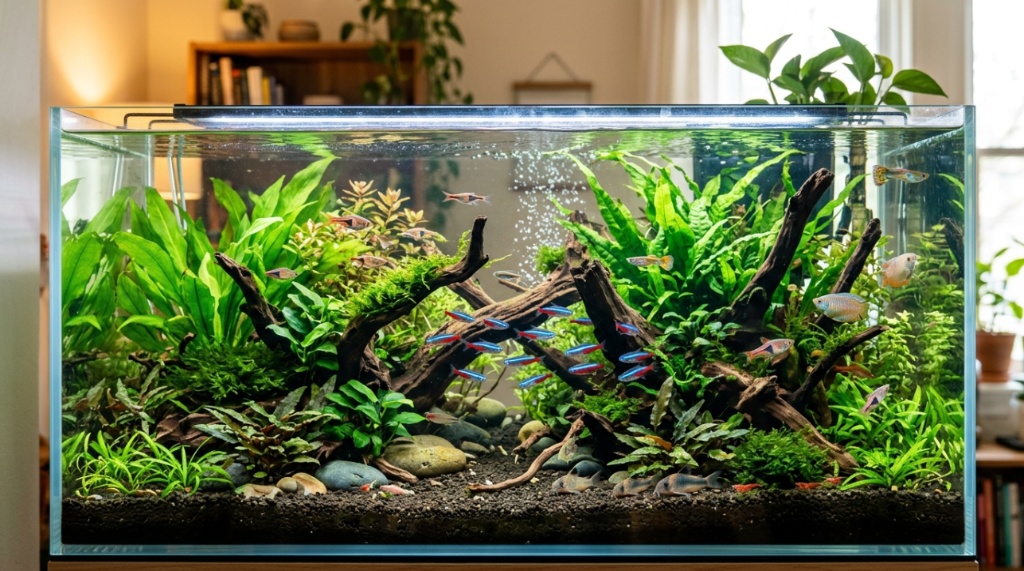
Choose a heater that provides 3 to 5 watts per gallon of water. A 50-gallon tank needs a 150 to 250-watt heater. Place the heater near water flow, such as near the filter output, to distribute heat evenly. Use a separate thermometer to verify temperature. Never trust the heater’s built-in dial alone. Set the temperature based on your fish species. Most community tropical fish thrive between 76°F and 80°F. Coldwater fish like goldfish need temperatures between 68°F and 72°F. Sudden changes of more than 2°F in an hour can cause shock.
Which Lighting System Supports Fish Health Without Causing Algae?
The right lighting system mimics natural day-night cycles and supports fish health indirectly by promoting plant growth and reducing stress. However, too much light or the wrong spectrum causes algae blooms that deplete oxygen at night.
LED lights are the best choice for most aquariums. They are energy-efficient, produce low heat, and offer adjustable intensity and color. For a fish-only tank, aim for 8 to 10 hours of light per day. Use a timer to maintain consistency. Plants need stronger light and longer photoperiods, but always increase light gradually. If algae appears, reduce lighting by one to two hours. Avoid direct sunlight on the tank, as it causes unpredictable algae growth and temperature spikes. Full-spectrum LEDs with a color temperature around 6500K provide natural daylight tones that show fish colors beautifully while supporting plant health.
How Do Water Testing Kits Prevent Silent Killers?
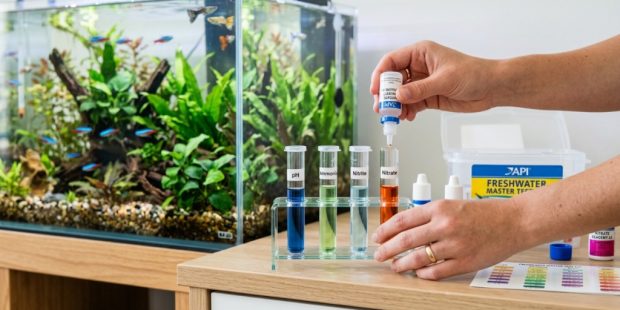
Water testing kits detect invisible toxins that can kill fish before you see any symptoms. Ammonia, nitrite, nitrate, and pH imbalances are common silent killers. Without regular testing, you are essentially flying blind.
Buy a liquid test kit, not test strips. Liquid kits are more accurate and reliable. Test ammonia and nitrite weekly during the first month of a new tank. After the tank cycles, test nitrate and pH weekly. Target levels are 0 ppm ammonia, 0 ppm nitrite, below 20 ppm nitrate, and a stable pH between 6.5 and 7.5 for most community fish. If you see ammonia or nitrite above zero, do a partial water change immediately. Test kits also help you diagnose problems like sudden fish death, lethargy, or gasping at the surface. Keep a log of your readings to spot trends before they become emergencies.
What Type of Substrate Reduces Stress and Supports Beneficial Bacteria?
Substrate is the material covering the bottom of your tank. It provides surface area for beneficial bacteria, anchors plants, and creates a natural environment that reduces fish stress. The wrong substrate can trap waste and degrade water quality.
For most freshwater tanks, fine to medium gravel works well. Avoid very large stones that trap debris, and avoid sand if you are a beginner, as it compacts easily and creates anaerobic pockets. Use a depth of one to two inches. Rinse the substrate thoroughly before adding it to the tank. If you keep fish that sift through sand, like corydoras or loaches, choose fine sand that is gentle on their barbels. For planted tanks, use nutrient-rich aquasoil to support root growth. Always choose a substrate that is inert or inert-coated to avoid leaching harmful minerals into the water.
Can Air Pumps and Airstones Really Improve Fish Health?
Yes, air pumps and airstones improve fish health by increasing dissolved oxygen levels and creating surface agitation, which promotes gas exchange. This is especially important in heavily stocked tanks, warm water, or tanks with low plant density.
An airstone connected to an air pump produces fine bubbles that rise slowly, allowing more oxygen to dissolve into the water. Surface agitation helps carbon dioxide escape and oxygen enter. Fish that gasp at the surface or hang near the filter outlet often need more oxygen. Run the air pump 24 hours a day. Place the airstone in an area with low flow for best bubble distribution. If you have a canister filter or hang-on-back filter, the outflow usually provides enough surface agitation. In that case, an airstone is optional but still beneficial for backup aeration and visual appeal.
When Should You Use a Sponge Filter Instead?
Sponge filters are excellent for fry tanks or hospital tanks because they provide gentle flow and prevent small fish from being sucked into the intake. They also offer extensive biological filtration surface area. Use a sponge filter in breeding setups or quarantine tanks.
While setting up the right aquarium accessories like robust filters will prevent most water issues, new tanks can still experience sudden cloudiness. If you hit this snag, check out these natural remedies for bacterial bloom aquarium to clear your water safely without harsh chemicals
Which Heater Type Is Safest for Different Tank Sizes?
Submersible heaters are the safest and most reliable choice for most home aquariums. They are fully waterproof, adjustable, and can be placed horizontally near the substrate for even heat distribution. For tanks under 10 gallons, use a mini submersible heater.
For tanks over 50 gallons, consider using two smaller heaters instead of one large one. This provides redundancy—if one fails, the other keeps the tank warm. Always unplug heaters during water changes to prevent shattering. Never allow the heater to be exposed to air while turned on. Titanium heaters are more durable than glass but cost more. In-line heaters that attach to the filter output are great for larger tanks and planted setups because they hide the equipment and provide precise temperature control.
| Heater Type | Best Tank Size | Pros | Cons |
|---|---|---|---|
| Submersible glass | 5–55 gallons | Low cost, adjustable | Fragile, can overheat |
| Submersible titanium | 10–150 gallons | Durable, shatterproof | Higher cost |
| In-line | 20+ gallons | Hidden, precise | Requires canister filter |
How Often Should You Replace Filter Media for Maximum Health?
Replace chemical filter media, like activated carbon, every four weeks. Replace mechanical media, like filter floss or pads, when they become clogged, typically every two to four weeks. Never replace biological media unless it is falling apart, as this crashes your cycle.
Replace carbon on a schedule because it becomes saturated and can release trapped toxins back into the water. For mechanical media, rinse it in old tank water between replacements to extend its life. Biological media like ceramic rings or bio-balls should last for years. Only replace about 25% of biological media at a time to preserve the bacteria colony. Keep spare media in a bucket of tank water if you need to replace it quickly during an emergency. Using high-quality aquarium accessories fish tank health depends on can make media replacement simpler and more effective.
What Role Do Decorations and Hiding Spots Play in Fish Health?
Decorations and hiding spots reduce stress by providing shelter from aggression and bright lights. Stressed fish have weakened immune systems and are more susceptible to disease. Hiding spots also allow shy fish to establish territories and feel secure.
Use smooth rocks, driftwood, artificial or live plants, and ceramic caves. Arrange them to create visual barriers and shaded areas. Avoid sharp edges that can injure fish. Driftwood releases tannins that soften water and have mild antibacterial properties, which benefits many species. Live plants like Java fern and Anubias are low-maintenance and improve water quality by absorbing nitrates. Clean decorations with a scrub brush and hot water only—never use soap or detergent. Quarantine new decorations in a bucket for 24 hours to remove dust or residues before adding them to your display tank.
Which Accessories Help Automate Maintenance and Improve Consistency?
Automated accessories like timers, auto-feeders, and dosing pumps reduce human error and maintain consistency, which is vital for fish health. Inconsistent feeding or lighting stresses fish and encourages algae growth.
Use a timer for your lights to maintain a consistent day-night cycle. An auto-feeder ensures fish get the right portion size at the same time daily, even when you are away. Dosing pumps are useful for planted tanks that need regular fertilizer additions. A backup battery-powered air pump is invaluable during power outages, as it keeps oxygen flowing for hours. Also consider a water changer, which siphons water directly to a drain, making water changes faster and more likely to happen on schedule. Automating small tasks frees your time and removes the biggest cause of aquarium failure: human forgetfulness.
How Do You Choose the Right Size Accessories for Your Tank?
Always choose accessories rated for a larger tank than yours. A filter rated for a 40-gallon tank works better in a 20-gallon tank than a filter rated for 20 gallons. The same applies to heaters, pumps, and lights.
Over-sizing provides a safety buffer. A larger filter processes waste more efficiently and requires less frequent cleaning. A stronger heater reaches the target temperature faster and maintains stability. For lighting, choose a model with adjustable brightness or dimming to avoid over-lighting. Measure your tank dimensions before buying equipment like lids, hoods, or stands. Check the manufacturer’s recommendations for maximum and minimum tank sizes. When in doubt, ask your local fish store or an experienced hobbyist. Investing in slightly oversized equipment costs a little more upfront but saves money and fish lives in the long run.
Frequently Asked Questions
How often should I test my aquarium water?
Test ammonia and nitrite weekly for the first two months of a new tank. After the tank is cycled, test nitrate and pH once a week. Test immediately if you see fish gasping, hiding, or acting strangely.
Can I use tap water directly in my aquarium?
No. Tap water contains chlorine and chloramines that kill fish and beneficial bacteria. Use a dechlorinator or let the water sit for 24 hours before adding it to the tank. Some tap water also contains high nitrates, so test it first.
What size heater do I need for a 10-gallon tank?
A 50-watt heater is sufficient for a 10-gallon tank. Place it near the filter outflow for even heat distribution. Verify the temperature with a separate thermometer to ensure accuracy.
How long can fish survive without a filter?
Fish can survive a few hours without a filter, but the beneficial bacteria die quickly without flow. If the filter stops, do a 50 percent water change and add an airstone immediately. Replace or repair the filter within 12 hours.
Do I need a lid or cover on my aquarium?
Yes, a lid reduces evaporation, prevents fish from jumping out, and keeps debris from entering the tank. It also protects equipment like lights and filters from splashes. Glass or acrylic lids are standard.
What is the best substrate for beginner fishkeepers?
Fine to medium gravel that is inert and pre-rinsed is the best choice for beginners. It is easy to clean, provides good bacteria surface area, and does not alter water chemistry. Avoid sharp or painted gravel.
Can I over-filter my aquarium?
You cannot over-filter an aquarium. More filtration means better water quality and more biological capacity. The only downside is current strength, so point the outflow toward the surface or use a spray bar to reduce flow in tanks with weak swimmers.
Conclusion
Healthy fish start with the right equipment. You now understand that a quality filter, stable heater, proper lighting, regular water testing, and appropriate substrate form the foundation of a thriving aquarium. Each accessory plays a specific role in maintaining water quality, reducing stress, and preventing disease. By choosing components that match your tank size and fish species, you create a stable environment where fish live long, active lives. Do not wait for problems to appear. Evaluate your current setup today, upgrade any weak links, and commit to a regular maintenance schedule. Your fish will reward you with bright colors, energetic behavior, and years of enjoyment. Start making these changes now, and transform your aquarium from a simple tank into a healthy, balanced ecosystem.
