

You have a long day ahead. You are commuting, exploring a new city, or heading from meeting to meeting. Your back hurts from your old backpack, and your pockets are stuffed. You need a solution that does not weigh you down. Enter the lightweight sling bag comfortable sling bag. But with so many options, how do you pick the one that actually works for a full day of wear without causing shoulder pain or frustration? This guide cuts through the noise to help you find the perfect everyday companion.
What Defines a Lightweight Sling Bag for Extended Wear?
A lightweight sling bag for long hours is a crossbody pack weighing under one pound, designed with ergonomic straps and strategic padding to distribute weight evenly across your back or chest. It prioritizes comfort, accessibility, and hands-free convenience over bulk.
Unlike a traditional backpack, a sling bag sits on one shoulder or diagonally across your torso. For all-day comfort, the materials matter. Look for ripstop nylon, Cordura, or recycled polyester. These fabrics offer durability without the heft of canvas or leather. The strap is the real hero. It should be at least two inches wide with breathable mesh padding. A narrow strap digging into your shoulder will ruin any day out. The bag itself should collapse easily when empty but expand to hold your essentials when needed.
Real-world usefulness comes from the weight you do not feel. If you can wear it while walking, standing on public transport, or sitting in a cafe without constantly adjusting it, you have found a winner. Always check the bag’s “dry weight” in product specifications, not just the claimed capacity.
Why Does Strap Design Matter More Than Bag Capacity for Long Hours?
The strap design dictates whether you will feel fresh after eight hours or need a chiropractor. Capacity is useless if you cannot physically carry the load. An ergonomic strap with a stabilizing cross strap prevents the bag from slipping and balances the load across your core.
Many people buy a bag with a huge 15-liter capacity but suffer because the strap is a thin piece of nylon. For long hours, prioritize a strap that has:
- Breathable padding: Reduces heat buildup and sweat.
- Anti-slip material: Silicone or grippy fabric on the inside keeps the bag in place.
- Quick-release buckle: Allows you to swing the bag around without taking it off.
I once tested a 25-liter sling bag that looked amazing but had a strap width of only one inch. After two hours of walking through a museum, my trapezius muscle was in knots. The next day, I switched to a 12-liter bag with a wide, padded strap and a sternum clip. The difference was night and day. Always test the strap tension and width before committing to a long day out.
How Should a Sling Bag Fit for All-Day Comfort?
For all-day comfort, the bag should sit high on your upper back or lower chest, with the main compartment resting against your body, not swinging away from it. The bottom of the bag should not dip below your waist.
Here is a step-by-step process to find your ideal fit:
- Adjust the strap: Shorten it so the bag sits snugly against your mid-back or upper hip.
- Test the mobility: Swing the bag to your front. You should be able to access the zippers without straining.
- Check the load: Fill the bag with your daily carry (water bottle, phone, wallet, charger) and walk for 10 minutes.
- Look for pressure points: If the bag digs into your armpit or ribs, it is too low or the strap is too tight.
- Evaluate the swing: The bag should stay put when you bend or reach.
A common mistake is wearing the bag too low, which pulls your shoulder down and creates lower back strain. Imagine the bag as part of your clothing, not a separate load. It should move with you, not against you.
Which Materials Offer the Best Balance of Weight and Durability?
The best materials for a lightweight sling bag comfortable sling bag are technical fabrics like 420D or 500D nylon, Dyneema, or high-tenacity polyester. These materials resist tearing, water, and abrasion while keeping the bag under 300 grams.
| Material | Weight per sq yard | Durability | Best For |
|---|---|---|---|
| 210D Nylon Ripstop | Light (2-3 oz) | Good for daily use | Urban commutes |
| 420D Nylon | Medium (4-5 oz) | Excellent | Travel and hiking |
| Cordura 500D | Medium-Heavy (6-7 oz) | Very High | Rough daily use |
| Dyneema Composite Fabric | Ultra-Light (1-2 oz) | Extremely High | Ultralight packing |
| Recycled Polyester | Light (3-4 oz) | Moderate | Eco-conscious choice |
Real-world advice: If you carry sharp objects like keys or tools, choose a 420D nylon or higher. For a simple phone and wallet setup, 210D ripstop is sufficient and feather-light. Waterproofing is a bonus. Look for YKK zippers and sealed seams if you face rain frequently.
How Many Compartments Do You Need for Organization Without Bulk?
You need three compartments maximum: a main cavity, a quick-access pocket, and a hidden security pocket. Too many compartments add weight and complexity. Minimalist organization wins for long hours.
The main compartment holds your larger items like a tablet, light jacket, or water bottle. The quick-access pocket, usually on the front or the strap, is for your phone, transit card, or sunglasses. The hidden pocket, against your back, is for a passport, wallet, or keys. This setup prevents you from digging through a dark abyss every time you need something. Avoid bags with ten tiny pockets that are too small to be useful. A simple, well-thought-out layout saves time and frustration when you are on the move.
Can a Sling Bag Replace a Backpack for a Full Day Out?
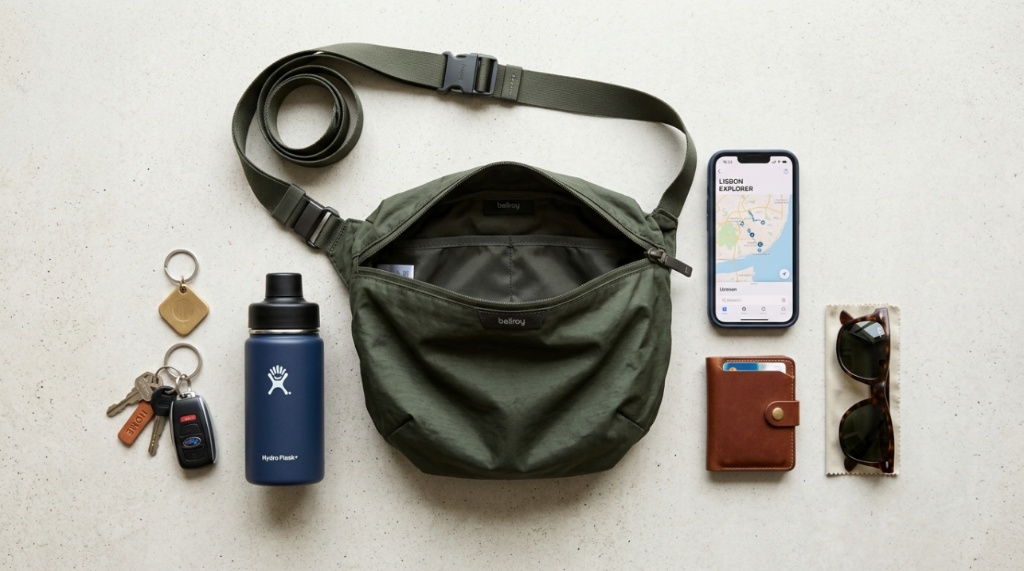
Yes, a sling bag can replace a backpack for a full day out if you carry fewer than 10 liters of gear and do not need to carry a heavy laptop or bulky items. For urban exploring, sightseeing, or light shopping, a sling bag is superior because it keeps your hands free and your belongings accessible.
The trade-off is weight distribution. A backpack puts the load on both shoulders and your hips. A sling bag puts the load on one shoulder and your core. For long hours, this is fine as long as you keep the total weight under 5 to 7 pounds. If you are carrying a laptop, books, or a full camera kit, stick with a backpack. But for a day of walking with essentials, a sling bag offers unmatched convenience. I have personally used a 9-liter sling bag for 12-hour days at theme parks and never looked back. The key is packing only what you truly need.
What Are the Key Features to Look for in a Travel Sling Bag?
Key features for a travel sling bag include a luggage pass-through strap, RFID-blocking pocket, theft-resistant zippers, and a waterproof exterior. These features protect your valuables and integrate with your other luggage.
When traveling, you need quick access to your boarding pass, passport, and phone. A front-facing or strap-mounted pocket is perfect. A luggage pass-through allows you to slide the bag over your suitcase handle, turning your carry-on into a rolling organizer. RFID-blocking is non-negotiable if you carry multiple cards or a contactless passport. Theft-resistant zippers, such as lockable YKK zippers, add peace of mind in crowded spaces. A waterproof exterior means you do not panic when it starts raining. These features turn a simple bag into a travel system.
How to Test a Sling Bag for Long-Term Comfort Before Buying?
To test a sling bag for long-term comfort, fill it with your typical items, wear it for 30 minutes around your home, and note any pressure points or slipping. Simulate real-world movements like bending, squatting, and rotating.
Here is a practical checklist for testing:
- Strap test: Run your hand under the strap. Is there enough padding? Does it feel hot?
- Load test: Put in three items: a phone, a water bottle, and a light jacket. Walk up and down stairs.
- Access test: Reach for the main pocket without taking the bag off. Can you do it easily?
- Stability test: Jog in place. Does the bag bounce wildly or stay steady?
- Pressure test: Wear the bag for 15 minutes on each side. Does one side hurt more?
If the bag passes these tests, it will likely serve you well for a full day. If you notice any pinch or slide within 30 minutes, the problem will only worsen after four hours. Trust your body’s feedback immediately.
Which Size Sling Bag Is Right for Your Daily Carry?
The right size is between 6 and 12 liters for daily carry. A 6-liter bag is perfect for a phone, wallet, keys, and a small power bank. A 10-to-12-liter bag fits a light jacket, tablet, water bottle, and snacks.
Choosing the wrong size is a common mistake. A bag that is too large encourages overpacking, which leads to shoulder fatigue. A bag that is too small forces you to carry items in your hands. Match the size to your specific routine. you only carry a phone and card case, 4 liters is enough. you need to carry a book or a tablet, go for 8 to 10 liters. you need a light layer and lunch, 12 liters is the sweet spot. Always check the internal dimensions, not just the liter rating, especially for tablets or laptops.
Is a Sling Bag Good for Hiking or Active Use?
A sling bag is good for light hiking, day walks, and active commutes, but not for technical hikes or heavy loads. For active use, look for a bag with compression straps, a sternum strap, and a moisture-wicking back panel.
For a short hike to a viewpoint or a walk through a park, a sling bag is fantastic. You can access your water, snacks, and phone without stopping. However, for a full-day hike with a 3-liter water bladder, rain gear, and first aid kit, a backpack is safer and more comfortable. The single strap of a sling bag can cause imbalance on uneven terrain. If you are buying a sling bag for active use, prioritize a bag with a central buckle or a stabilizing strap that prevents the bag from shifting. This keeps your center of gravity stable.
How to Avoid Shoulder Pain When Using a Sling Bag All Day?
To avoid shoulder pain, distribute the weight evenly by adjusting the strap so the bag sits high, switch shoulders every hour, and keep the total load under 5 pounds. Use a bag with a wide strap and a sternum clip to reduce pressure on the trapezius muscle.
Here are additional actionable tips:
- Strengthen your core: A strong core supports the asymmetrical load better.
- Take it off during breaks: When sitting down for lunch or on the train, remove the bag to give your shoulder a break.
- Pack smart: Place heavy items closest to your back, not in the outer pockets.
- Stretch: Simple shoulder rolls and neck stretches every hour relieve tension.
If you consistently feel pain, the bag is either too heavy, too small, or poorly designed. Do not accept pain as normal. A well-designed lightweight sling bag comfortable sling bag should feel like a second skin, not a burden.
While a lightweight sling bag is unbeatable for hands-free commuting, sometimes your outfit or destination calls for a completely different silhouette. If you are looking to elevate your wardrobe with a more spacious, fashion-forward look, you can explore where to Buy Designer Hobo Bags in California? to complete your collection.
Frequently Asked Questions
What is the ideal weight for a lightweight sling bag?
The ideal weight for a lightweight sling bag is under 300 grams (10.5 ounces) for the bag itself. This allows you to carry up to 2-3 pounds of items without overwhelming your shoulder.
Can I carry a tablet in a lightweight sling bag?
Yes, many lightweight sling bags are designed for 7-to-11-inch tablets. Look for a padded sleeve inside the main compartment to protect the screen. Bags with a 10-liter capacity or more usually accommodate tablets easily.
How do I clean a lightweight sling bag?
Most nylon or polyester sling bags can be hand washed with mild soap and cold water. Do not machine wash. Rinse thoroughly and air dry away from direct heat. Spot clean the strap and lining to maintain durability.
Is a sling bag secure enough for travel?
Yes, a sling bag is secure for travel if it features lockable zippers, a hidden back pocket, and a flap design. Wear it on your front in crowded areas to deter pickpockets. Choose one with RFID protection for extra security.
Can I use a sling bag as a diaper bag?
A sling bag can work as a minimalist diaper bag for short outings. It holds a few diapers, wipes, a changing pad, and a small bottle. For longer trips, a dedicated diaper backpack is better due to the larger capacity.
What is the difference between a sling bag and a crossbody bag?
A sling bag typically has a single strap designed to be worn across the body or on one shoulder, often with a sporty or casual look. A crossbody bag is a broader category that includes dressier handbags worn across the body. Sling bags usually have more organizational pockets.
How do I prevent my sling bag from slipping off my shoulder?
Prevent slipping by using a bag with an anti-slip strap, wearing it diagonally across your chest, and adjusting it so it sits high. A sternum strap or a quick-release clip also helps keep the bag in place during movement.
Conclusion
Choosing the right lightweight sling bag comfortable sling bag for long hours comes down to three pillars: fit, strap design, and the discipline to pack light. You do not need a massive bag. You need a bag that disappears on your body. Start by weighing your current daily carry. Your comfort is not a luxury. It is a necessity for a productive, enjoyable day. Do not settle for a bag that hurts. Use the criteria in this guide to test and choose wisely. Your shoulders will thank you after a long day of exploring, commuting, or traveling. Now take what you have learned, and find the bag that truly supports your lifestyle.
