
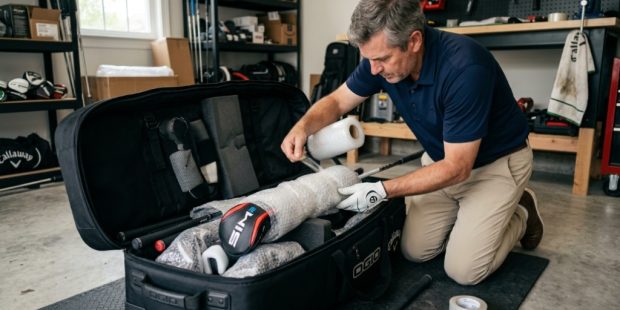
Watching the baggage carousel from a distance can feel like a gamble. You spot your golf bag, but it is lying flat rather than standing upright, and a sickening thought hits you: the driver head might have taken the full weight of the impact. A snapped graphite shaft does not just end a trip—it can end a season of play. Because airlines handle luggage roughly and baggage fees are non-refundable, your best defense is a heavy duty golf travel bag combined with a few simple internal packing techniques. Here is how to make sure your clubs arrive intact.
Quick Answer
Protect your driver and graphite shafts by using a hard-shell case or a heavily padded travel bag, removing the driver head if it is adjustable, inserting a stiff rod or shaft protector into the bag, and wrapping towels around the clubheads. Always use a support rod that is at least as long as your longest club, and never check a golf bag that is loosely packed. TSA-approved locks and smart packing reduce the risk of impact, bending, and baggage-handler damage.
Key Takeaways
- Graphite shafts break because of lateral bending, not just direct impact—so internal bracing and limiting movement matter more than thick exterior padding alone.
- Adjustable driver heads should be removed and stored separately inside the travel bag to reduce the joint stress that causes cracking.
- A stiff rod or a dedicated shaft protector should be at least as long as your driver and placed alongside the shafts, not in the center of the bag.
- Packing the bag tight with towels or bubble wrap stops clubs from shifting, which is the most common cause of damage during transit.
- Regardless of bag type, check your airline’s fragile-item policy and consider adding a hard case liner for extra rigidity.
Why Graphite Shafts Fail on Airplanes
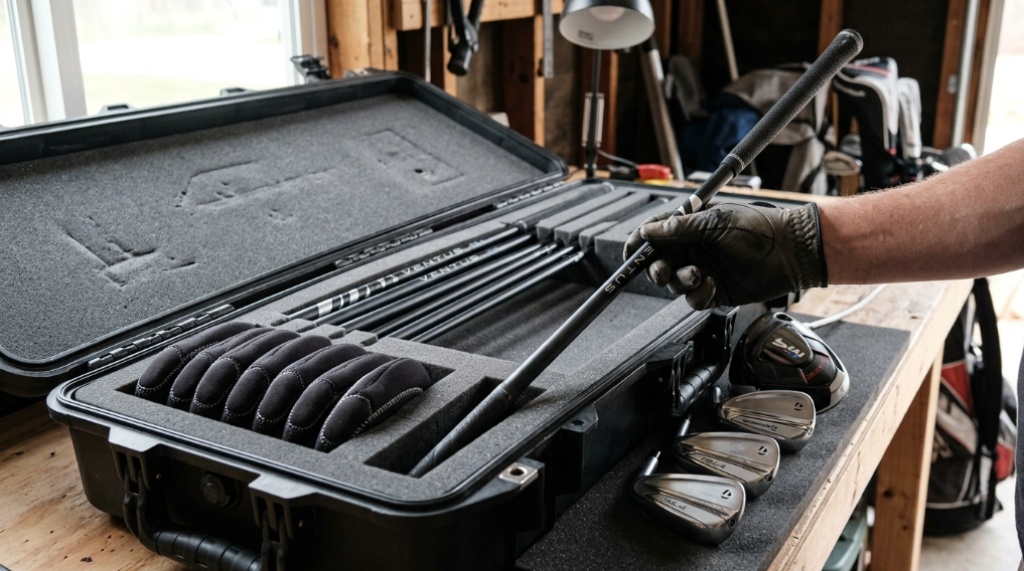
Graphite shafts are strong along their length, but they are vulnerable to bending forces applied from the side. When a golf travel bag is thrown, stacked, or compressed, the clubs inside can flex in ways they never would during a normal swing. A driver is the longest club in the bag, which means it absorbs the most leverage when the bag is bent or dropped. The shaft acts like a lever, and the head acts like a weight. If the head is left attached and the bag is crushed, the shaft can snap just below the hosel or develop a hairline crack that fails later on the course.
Another factor is temperature. Cargo holds can get very cold at altitude. Graphite resin becomes slightly more brittle in low temperatures, and a sharp impact while cold can do more damage than the same impact at room temperature. This is one reason a hard-shell case or a well-structured soft case with rigid bracing performs better than an unpadded bag.
Hard Case vs. Soft Case: Which Protects Graphite Better?
Hard cases offer the most protection against crushing and impact. They are rigid, they do not collapse under stacked luggage, and they shield the entire club length. The trade-off is weight, storage space, and cost. Many hard cases also cannot accommodate oversized cart bags without removing the stand or the wheels.
Soft cases with a heavy duty design are lighter, easier to fold, and often cheaper. Their protection depends entirely on how well they are packed. A padded soft case with a built-in support rod and a tight pack can protect graphite shafts well, but a cheap unpadded soft case offers almost no protection against a heavy drop.
For most traveling golfers, a hybrid approach works best: a heavily padded soft case with a rigid internal support rod and a stiff liner. This gives you the portability of a soft bag with a meaningful layer of protection.
| Factor | Hard Case | Soft Case with Support Rod |
|---|---|---|
| Crush resistance | Excellent | Moderate to good |
| Weight | Heavy | Light |
| Storage when not in use | Bulky | Folds down |
| Risk of shaft bending | Very low | Low if packed tightly |
| Airline handling friendliness | Sometimes rejected if oversized | Generally accepted |
If you fly frequently and carry expensive graphite shafts, a hard case is the safer long-term investment. If you fly once or twice a year, a well-packed soft case with a support rod is usually sufficient,if you are also planning a rugged trip beyond the golf course, check out these options for military-grade backpacks for outdoor adventures on a dime.
Step-by-Step Packing Method for Maximum Protection
Follow this sequence to minimize movement and protect the driver and shafts.
- Remove the driver head if it is adjustable. Store the head in a separate padded pouch or inside your carry-on. This eliminates the leverage that a heavy head places on the shaft during impact.
- Place a stiff support rod or shaft protector alongside the shafts. It should be at least as long as your driver. Position it near the outer edge of the bag, not in the middle, so it absorbs bending forces first.
- Wrap each clubhead in a towel or headcover. Irons can knock against graphite shafts during transit, so separate them with fabric.
- Fill empty space. Use towels, bubble wrap, or clothing to eliminate any movement. A bag that rattles when shaken is a bag that will damage clubs.
- Secure the top with the rain hood or a stiff cover. This prevents the clubs from sliding out and adds a layer of protection at the most vulnerable point.
- Use a TSA-approved lock. This allows inspectors to open the bag without cutting the lock, and it keeps the zippers from opening accidentally.
Common Packing Mistakes That Break Shafts
Even golfers who use a heavy duty golf travel bag make mistakes that lead to damage. The most common is leaving the driver head attached and assuming the headcover is enough protection. Headcovers protect against scratches, not against bending forces. Another mistake is packing the bag loosely so clubs can slide. A third is placing the support rod in the center of the bag, where it does not brace against the outer wall that takes the impact.
Some golfers also forget to remove alignment sticks or training aids, which can press against shafts during compression. Others overstuff the bag to the point that the zipper is strained, which weakens the bag’s structure. A simple rule: if you cannot close the bag without forcing it, you have packed too much.
How to Choose a Travel Bag That Actually Protects Graphite
Not all travel bags are equal. When evaluating options, look for these specific features:
- Reinforced top and bottom panels that resist crushing at the points where clubs are most exposed.
- Internal straps or compression straps that hold clubs in place during transit.
- Thick foam padding at least 10–15 mm around the clubhead area, not just on the exterior.
- A rigid or semi-rigid liner that runs the full length of the bag.
- Heavy-duty zippers with locking sliders, because a failed zipper exposes the entire bag to damage.
- Wheeled base to reduce the need for handlers to drag or throw the bag.
A bag with these features will cost more than a basic soft case, but it will also last longer and protect clubs more reliably. If you travel with a high-end driver or aftermarket graphite shafts, the cost difference is small compared to replacing a shaft or a head.
What Airlines Do and Do Not Cover
Most airlines classify golf clubs as checked baggage, not fragile items. That means they are not required to handle them with special care. Some airlines offer limited liability for damage, but the payout is often capped and rarely covers the full value of a premium driver. Travel insurance or a dedicated golf equipment policy can fill the gap, but the best strategy is prevention.
Before you fly, check your airline’s specific rules on golf bags, weight limits, and oversized baggage. Some carriers require golf bags to be checked at a special counter, and a few impose extra fees for hard cases over a certain size. Knowing these rules in advance prevents surprises at the airport.
Frequently Asked Questions
Can I bring my golf clubs as a carry-on?
No. Golf clubs are not allowed as carry-on items on commercial flights. They must be checked, which is why packing them properly in a travel bag is essential.
Should I remove the driver head before flying?
Yes, if your driver has an adjustable hosel. Removing the head reduces leverage on the shaft and prevents stress at the joint, which is a common failure point.
Is a hard case always better than a soft case?
Hard cases offer superior crush protection, but a well-packed soft case with a rigid support rod and tight packing can also protect graphite shafts effectively. The best choice depends on how often you fly and how much you want to spend.
How do I stop clubs from moving inside the bag?
Fill all empty space with towels, bubble wrap, or clothing. Use the bag’s internal straps and compression straps. If the bag rattles when you shake it, it is not packed tightly enough.
Does travel insurance cover broken golf shafts?
Some policies do, but coverage varies widely. Check the policy details for sports equipment and fragile item exclusions before relying on insurance to replace a broken shaft.
Can cold temperatures damage graphite shafts in the cargo hold?
Cold makes graphite resin slightly more brittle, so a sharp impact at low temperatures can be more damaging than the same impact at room temperature. This is another reason to use a rigid case or a tightly packed bag with a support rod.
Conclusion
Protecting your driver and graphite shafts comes down to three things: reducing leverage on the head, preventing movement inside the bag, and using a case that resists crushing. Removing an adjustable driver head, adding a full-length support rod, and packing the bag tightly are simple steps that prevent most damage. A heavy duty golf travel bag with reinforced panels and internal straps gives you the best chance of arriving with intact clubs. Before your next flight, take five extra minutes to pack properly—it is far easier than replacing a snapped shaft.
