
Your wedding day flies by in a beautiful blur. You spent months planning every detail, yet the day itself feels like a whirlwind of emotions, laughter, and tears of joy. When the confetti settles, the one tangible thing you have left—besides your partner—is the visual story of that day. But here’s the problem: most couples end up with a generic, flimsy photo book that sits on a shelf collecting dust, or worse, a digital folder that gets forgotten in the cloud. You deserve more than that. You need a heirloom-quality wedding album that truly captures the essence of your celebration. This guide will walk you through everything you need to consider, from materials and layouts to budgeting and digital options, ensuring you pick an album you’ll cherish for decades.
What Makes a Wedding Album “High Quality” in 2026?
A high-quality wedding album is distinguished by its materials, print resolution, and craftsmanship. It’s not just about pretty pages; it’s about the durability of the binding, the feel of the cover, and the archival-grade inks that prevent fading. In 2026, the gold standard has shifted toward customizable, handmade options that prioritize longevity over mass production. You are investing in a legacy piece, so understanding the construction is the first step toward making a wise choice.
Understanding Archival-Grade Printing and Papers
Traditional printing methods can leave your photos looking flat and susceptible to yellowing over time. Modern high-quality albums use archival-grade pigment inks and acid-free, lignin-free papers. These materials ensure that your photos remain vibrant for 100 years or more. When you’re comparing vendors, look for specific mentions of “archival” or “museum-grade” materials. Also, consider the paper finish: a lustre or matte finish reduces glare and fingerprints, while glossy papers make colors pop but require more careful handling. Your choice should reflect your lifestyle—if you have young kids or pets, a durable, fingerprint-resistant finish is more practical.
The Significance of Book Binding Techniques
Binding is the skeleton of your album. The two most common premium options are flush mount and layered page. Flush mount albums feature thick pages (usually 1/8 inch thick) that are permanently bonded to a flat lay binding. This allows the album to open completely flat, creating a seamless panoramic spread without any gutter break in the middle of your images. Layered page albums are lighter and have a more traditional book feel, but they also have a visible crease in the center. For photographers and collectors, flush mount is generally considered superior due to its durability and display quality.
Leather vs. Linen vs. Velvet: Choosing the Right Cover
The cover sets the tone for the entire album. Leather is the classic choice; it ages beautifully, developing a unique patina over time. You can choose from full-grain, top-grain, or bonded leather, each offering different levels of durability and cost. Linen covers offer a more relaxed, textured feel and come in a variety of fashionable neutral tones. Velvet and silk covers are luxurious but prone to damage and should be reserved for display albums that won’t be handled very often. When picking a cover, think about how you want the album to feel in your hands and how it will look on your coffee table, If you are shopping for your friends or family members, finding the Perfect Wedding Gift for the Newlyweds can make their celebration even more memorable.
Why Should You Choose a Professional Album Over a DIY Book?
You should choose a professional album because the difference in quality, design, and longevity is monumental. DIY books are perfect for a casual family vacation, but they simply cannot match the craftsmanship and storytelling capability of a professionally designed album. Professional albums are custom-pressed, ensuring accurate color representation and high-resolution reproduction. They also come with design services that save you hours of stressful template editing.
Comparing Print Resolution and Color Accuracy
Consumer DIY printers often struggle with accurate color profiles, leading to photos that look too dark, too warm, or pixelated when printed large. Professional album labs use calibrated printers that match your photographer’s edited colors precisely. They also use higher DPI (dots per inch), typically 300+ DPI, which results in sharp, crisp images even on large spreads. If you’re investing in a professional photographer, the last thing you want is to degrade their work with a poor-quality print job.
The Value of Professional Layout and Design Services
Designing an album is an art. It’s not just about placing photos on a page; it’s about creating a visual narrative with pacing, flow, and breathing room. Professional album designers are trained to select the best images from your gallery and arrange them to tell your story chronologically and emotionally. They balance large hero shots with smaller detail images, ensuring the album feels dynamic rather than monotonous. This service typically pays for itself in the time and stress it saves you, especially when you’re busy with newlywed life.
Durability and Warranty Considerations for Long-Term Use
Professional albums often come with a lifetime warranty or guarantee against manufacturing defects. This is a huge advantage over DIY books, which may fall apart after a few years. Premium albums are built to withstand the test of time—the pages won’t stick together, the binding won’t crack, and the cover won’t warp. This durability makes them a true heirloom, designed to be passed down to future generations. Always check the warranty terms before purchasing to understand what is covered.
How to Choose the Right Album Size and Orientation?
Choosing the right size and orientation depends entirely on your space and the style of your photos. The most popular sizes are 10×10, 12×12, and 8×12. A 12×12 is the classic choice for traditional wedding coverage, offering ample space for large photos. A 10×10 is lighter and easier to handle. For panoramic landscapes, an 8×12 or 12×16 is ideal. Your photographer can provide advice, but the decision ultimately comes down to your personal preference and where you plan to display the album.
Square vs. Rectangular Albums
Square albums (like 10×10 or 12×12) offer a symmetric, center-focused layout that works well for portraits and detail shots. They sit well on coffee tables and bookshelves. Rectangular albums (like 12×8 or 12×24) are better for showcasing landscape-oriented photography and panoramic group shots. They feel more cinematic and modern. Consider the predominant orientation of your favorite photos. If your photographer shot mostly vertically (portraits), a square album will minimize cropping. If you have many horizontal shots, a rectangular album is more efficient.
Understanding How Size Affects Photo Resolution
When you choose a larger album, you need to ensure your photos have enough resolution to print cleanly. A professional camera (12+ megapixels) will easily handle a 12×12 print. However, if you have older photos taken with a smartphone, you might hit resolution limits at larger sizes. Always check with your album provider about their minimum resolution guidelines. They can often advise on whether your files are suitable for a particular size without losing quality.
Selecting the Best Layout for Your Story
Your album layout should follow a natural progression: getting ready photos, ceremony, portraits, reception, and exit. Within that structure, think about pacing. You don’t want every page to have the same number of photos. Use full-bleed spreads for dramatic moments and white space (or negative space) to let important images breathe. A good designer will create a rhythm that keeps the viewer engaged. You can also incorporate your vows or a favorite quote as text to add context and romance.
Which Binding Type is Best for Flat-Lay Spreads?
For perfectly flat, seamless spreads, a flush mount binding is the definitive best choice. This method uses stiff pages permanently adhered to a central spine, allowing the album to open 180 degrees. This ensures that a single photo can span across two pages without a dip or crease in the middle. This style is essential for large panoramic landscape shots or for displaying a full-length portrait without breaking the composition.
Flush Mount vs. Layered Page Albums
We touched on this earlier, but it deserves a deeper dive. Flush mount albums are thicker and heavier, made of sturdy pages that feel like cardboard. They are costly to produce but offer the highest quality. Layered page albums are thinner and lighter, with pages that are hinged together. They are more affordable but have a visible gutter. While some high-end layered books try to minimize the gutter, they cannot eliminate it entirely. If you are a professional photographer or a client who wants the absolute best display, flush mount is the way to go.
The Pros and Cons of Layflat and Side-Stitch Bindings
Side-stitch bindings involve sewing the pages together at the side edge, which allows for flat opening but is less durable and can cause stress on the spine. Layflat is a broad term that covers various techniques, but flush mount is the most common and reliable. Another popular option is the Swiss binding, which exposes the spine and gives a modern, artistic feel. However, this style often doesn’t lie completely flat on the back. We recommend sticking with flush mount for its proven reliability and elegant look.
When Should You Start Designing Your Wedding Album?
You should start designing your wedding album within the first two months after your wedding when memories are still fresh and momentum is high. Waiting too long can lead to procrastination and decision fatigue. By starting early, you can also take advantage of any special offers or bundles your photographer may provide as part of your package. The best time is actually during the honeymoon phase, when you’re still feeling the glow and are excited to relive the day through your photos.
Creating a Timeline for Album Design and Approval
Begin by scheduling a “viewing and ordering” session with your photographer about 3-4 weeks after the wedding. This gives them time to edit the images. At this meeting, you’ll select your favorite photos and discuss the album design. Typically, the design process takes 2-4 weeks, followed by a proofing period where you can request changes. After you approve the final layout, the printing and shipping can take another 2-6 weeks, depending on the vendor and customs. Plan for a total of 2-3 months from selection to delivery.
How to Review and Proof Your Album Before Printing
Most professional studios provide online proofing software. Take the time to zoom in on every page and check for any typos, incorrect image crops, or color balance issues. Print a low-resolution PDF to review the general layout at home. Ask your partner for their input, and get a second opinion from a friend with a good eye. It’s easier to fix mistakes on a screen than in a printed book. Don’t be afraid to ask for revisions—most designers will provide 2-3 rounds of changes.
Managing Expectations with Your Photographer
Be clear about your budget and expectations upfront. Communicate which photos are “must-haves” and which ones you’re flexible about. If you have a specific style in mind (e.g., minimalist with lots of white space, or edgy with dark backgrounds), share examples with your photographer. They are professionals and can guide you, but they need your input to make the album truly personal.
Can You Include Text and Keepsakes in Your Wedding Album?
Yes, absolutely, and you absolutely should. Including text—like your vows, a thank-you note to your parents, or the lyrics to your first dance song—adds a deeply personal layer to your album. It transforms it from a simple photo collection into a narrative. Some modern album companies also offer unique ways to incorporate small physical keepsakes, such as a swatch of your wedding dress fabric or a dried flower from your bouquet.
Creative Ways to Add Personal Quotes and Vows
Instead of just captioning photos, consider dedicating a full opening page to your vows or a personal “letter to each other.” Use elegant typography. You can also intersperse short, impactful quotes throughout the album, like a line from your officiant’s speech or a toast from your best man. This breaks up the visual content and provides context for the photos that follow. Always proofread your text carefully—spelling errors are a common and disappointing mistake.
Incorporating Memorabilia and Fabric Samples
Some premium album makers can create a pocket page or a specialized envelope within the album to hold small mementos. You can include a swatch of your lace, a pressed flower from your centerpiece, or even your wedding invitation. This creates a multi-sensory experience. Be careful about memorabilia that is too thick or bulky, as it can damage the binding over time. Always consult with the manufacturer about what is safe to include in their specific album style.
Balancing Photo-Only Pages with Text-Heavy Pages
A good rule of thumb is to keep 70% of the album photo-focused, with 30% incorporating text and graphics. Too much text makes the album feel more like a scrapbook, while too little makes it feel sterile. Use text to enhance, not overpower, the visual story. The goal is to create a cohesive, beautiful flow that guides the viewer through your day with ease.
What Is the Ideal Budget for a Premium Personalized Album?
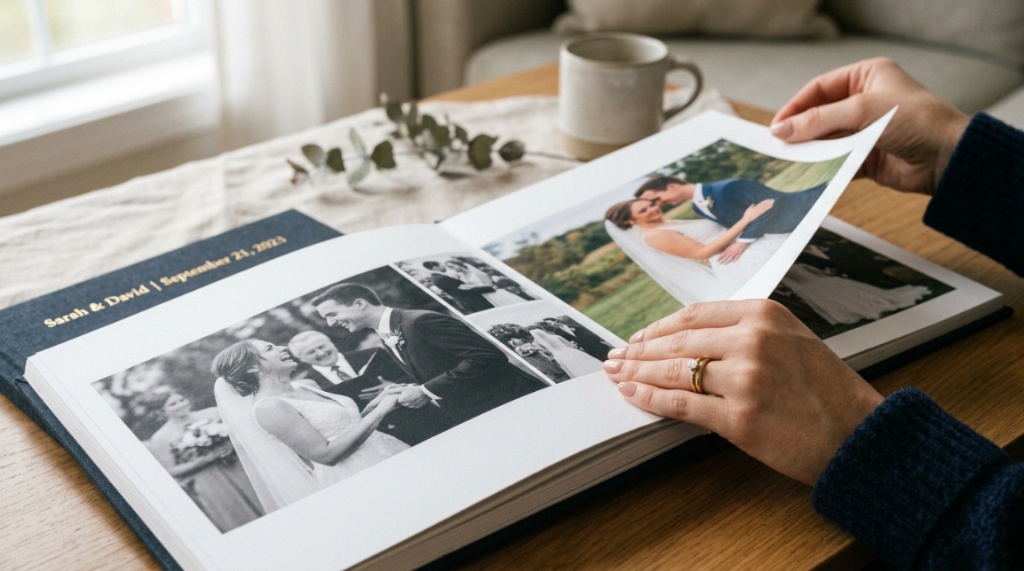
The ideal budget for a high-quality, professionally designed wedding album in 2026 ranges from $1,200 to $2,500. This price typically includes the album itself, design services, and shipping. While that may seem significant, this is an heirloom you’ll own forever. You can find less expensive options, but they often compromise on print quality, materials, or design services. Budgeting for a premium album is investing in the longevity and beauty of your memories.
Breaking Down the Costs of Albums, Printing, and Shipping
| Feature | Budget-Friendly ($400-$800) | Mid-Range ($900-$1,400) | Premium ($1,500+) |
|---|---|---|---|
| Binding | Layered Page | Thin Flush Mount | Thick Flush Mount |
| Cover | Faux Leather / Linen | Full-Grain Leather | Custom Embossed Leather |
| Printing | Standard Photographic | High-Resolution Giclee | Archival Pigment Prints |
| Design Service | Template Based | Custom Design (2 Revisions) | Unlimited Revisions |
| Shipping | $30-$60 | $50-$80 | Included / Insured |
This table illustrates that the quality of materials is the primary cost driver. You are paying for durability, longevity, and the skill of the designer.
How to Avoid Hidden Fees and Overvalued Upgrades
Before signing a contract, ask for a full breakdown of costs. Some vendors charge extra for “premium paper” or “rush shipping” that should have been included. Avoid “matted” albums where you have to pay more to have your photo mounted on cardstock. In some cases, adding pages to your album can become extremely pricey. Clarify the per-page cost for additional spreads upfront. Also, ask about potential taxes and duties if ordering from abroad.
Is an Heirloom Album Worth the Investment?
The answer is unequivocally yes. I remember a client who decided to save money on a cheaper album. Five years later, the pages stuck together, and the cover bowed. She had to invest in a replacement album anyway, costing her more in the long run. Consider your album an heirloom. It should be durable enough to pass down to your children and grandchildren. The emotional value it holds far outweighs the initial cost. Think of it as buying a piece of art—a masterpiece that hangs in your home and tells your unique story.
How to Choose the Best Photographer to Design Your Album
Choosing the right photographer for your album is less about their skill with a camera and more about their aesthetic and design capabilities. You are entrusting them with the final presentation of your memories. When interviewing photographers, specifically ask about their album design process. Look at full album spreads in their portfolio, not just individual photos. This will give you a sense of how they lay out a story and whether their style aligns with your taste.
Questions to Ask Before Booking Your Album Design
Ask these key questions: “How many hours are included in the design process?” “Can I see examples of complete albums you’ve designed?” “What is your policy on revisions and changes?” “Do you offer parent albums as add-ons?” “What is the turnaround time from final approval to delivery?” Also, ask about the software they use for design and how they handle file backup. A reputable photographer will be transparent and happy to answer all your questions.
Portfolio Reviews: What to Look For in a Designer’s Past Work
When viewing a photographer’s albums, look for consistency in layout. Are the images aligned correctly? Is there a good mix of full-spread photos and smaller groupings? Is the text well-placed and spelled correctly? Look for an album that tells a cohesive story from start to finish. If the portfolio feels disjointed, with random photo placements, that’s a red flag. A good designer has a keen sense of rhythm and pacing.
Reading Reviews and Testimonials for Quality Assurance
Patient reviews are the best indicator of a photographer’s professionalism. Look for reviews on Google, The Knot, and WeddingWire. Specifically, search for comments about the album quality and the final product. Don’t just look at star ratings; read the written feedback. If multiple people mention that the album was “stunning” or “exceeded expectations,” you can trust that the photographer does excellent work. Also, check how the photographer handles negative reviews—a professional will respond gracefully and try to resolve issues.
When you are ready to start browsing, ensure you find a trusted and reputable team. You can start your search for the best options in your area by checking out this comprehensive guide for a wedding album that compares top-rated vendors, prices, and styles to help you make an empowered decision.
Can You Mix Digital Screens with Physical Albums?
Absolutely, and this is a massive trend in 2026. Blending a physical, high-quality album with a digital companion piece gives you the best of both worlds. You get the tactile, heirloom experience of a physical book, plus the convenience and shareability of digital files. This hybrid approach ensures your memories are accessible everywhere.
The Role of USB, Cloud Storage, and Mobile Apps in Your Album
Your physical album should be accompanied by a high-resolution digital file collection. Store your images on a secure cloud service (like Dropbox or Google Photos) and on a physical external hard drive. Many photographers now include a beautifully engraved USB with your final images and album design. This ensures you have backups, and you can easily share individual photos on social media. Some companies even offer “smart” albums that sync with an app to display videos alongside the printed pages.
Creating a “Digital Edition” of Your Print Album
Consider purchasing an ebook or PDF version of your album layout. This is a great way to share your full story with friends and family who live far away. It can be emailed, viewed on a tablet, or displayed on a smart TV. This digital edition is cheaper to create than a second physical copy, making it an excellent option for grandparent gifts. You get the exact same design, but in a versatile digital format.
Safe Storage and Backup Tips for Your Digital Files
The 3-2-1 backup rule is crucial here. Keep 3 copies of your files, on 2 different types of media (e.g., cloud and hard drive), with 1 copy stored off-site (like in a safety deposit box or a relative’s house). This protects you against hard drive failure, cloud hacking, or even a house fire. Do not rely solely on your email or social media accounts for backup, as those can be lost or deactivated. Your digital files are just as precious as the physical album.
What Are the Top Album Trends for Modern Couples in 2026?
The top trends in 2026 focus on sustainability, personalization, and unique materials. Couples are moving away from traditional, stuffy albums and embracing modern, artistic designs that reflect their personal style. This includes fine art textures, unexpected cover materials, and layouts that break the typical mold.
Fine Art and Contemporary Album Styles
Fine art albums are characterized by their minimalist design and use of high-end materials. They often feature a lot of negative space, muted colors, and a focus on texture. The cover might be a soft linen or a suede-like microfiber. Internally, the pages are thick and matte, giving the album a museum-quality feel. These albums are less about capturing every single moment and more about curating a few stunning pieces of art.
Embossed Covers and Custom Typography Trends
Embossing is making a major comeback. Instead of a simple leather cover, couples are choosing to have their names, the wedding date, or a meaningful symbol deeply embossed onto the cover. Custom typography is also a huge trend, with couples choosing elegant serif or modern sans-serif fonts for their monograms. This adds a touch of sophistication and makes the album unmistakably yours.
The Rise of Eco-Friendly and Sustainable Album Materials
As awareness of environmental issues grows, so does the demand for sustainable albums. Many companies now offer albums made from recycled leather, organic cotton linen, or FSC-certified wood. The printing processes are also becoming more environmentally friendly, using water-based inks and reducing waste. Choosing a sustainable album allows you to have a beautiful product without compromising your values.
Frequently Asked Questions
How many pages should a wedding album have?
Most wedding albums range from 30 to 50 pages, but the ideal number depends on the length of your wedding day and how many photos you want to showcase. A typical full-day wedding (8-12 hours) can fill a 40-page album beautifully. For smaller elopements, 20-30 pages can be perfect. It’s better to have a smaller album with only amazing photos than a large album with filler shots.
Can I put iPhone photos in my professional wedding album?
Yes, you can include high-quality iPhone photos, especially candid shots that your photographer may have missed. However, ensure they are high resolution and not zoomed-in too much. Most professional album labs can print phone photos well, but they may not be as sharp as images from a professional DSLR. Bring the original files to your design session to see how they look.
How long does it take to receive my final album?
After you approve the final album design, it typically takes 4 to 6 weeks for printing and binding. International orders can take longer due to shipping and customs. Always add a couple of weeks for potential delays. Building in this buffer ensures you don’t stress about a last-minute deadline.
What is the difference between a photo book and a wedding album?
A photo book is typically a mass-produced item with thin, flexible pages that are printed digitally. A wedding album is a premium product with thick, durable pages, often flush-mounted and handcrafted. Wedding albums are designed for longevity and offer higher customization and print quality, while photo books are more cost-effective but less durable.
Should I get parent albums as well?
Absolutely, parent albums are a beautiful gesture. They are smaller versions of your main album (e.g., 8×8 or 5×7) and contain a curated selection of your favorite photos. Parents cherish these as keepsake gifts. Many photographers offer discounted pricing when you purchase multiple albums with your main one.
Can I update my album with photos from the wedding later?
Designing your album after the wedding is a fixed project. Once printed, you cannot change the pages easily. This is why the proofing stage is so crucial. However, some companies offer re-printing services at an additional cost if you want to make significant changes later, effectively redesigning the album from scratch.
