

Most people assume anything sold in a surf shop or worn near the ocean counts as surf apparel. Then they paddle out in a cotton t-shirt, get held down by a soaked rash guard that wasn’t built for the water, or spend a chilly post-session drive home in wet board shorts. The gap between surf apparel and regular beachwear isn’t marketing spin it comes down to how each garment handles water, salt, sun, sand, and movement. Understanding these differences matters most when you’re choosing gear that has to perform, from boardshorts to a Sun Cube surf poncho review and features that shows how purpose-built surf gear solves problems beachwear simply ignores.
Quick Answer
Surf apparel is engineered for active use in the water: quick-drying, chlorine- and saltwater-resistant fabrics, snug fits that won’t ride up or cause drag, and features like rash protection and secure closures. Regular beachwear is designed for lounging and looking good on land — cotton, loose cuts, decorative hardware, and slow-drying materials. The difference matters most when you’re actually surfing, swimming hard, or spending hours in the sun and water.
Key Takeaways
- Surf apparel prioritizes function in the water: quick-dry fabrics, secure fits, and skin protection. Beachwear prioritizes comfort and style on land.
- Fabric choice is the biggest divider — nylon, polyester, spandex, and neoprene for surf gear versus cotton, linen, and blends for beachwear.
- Features like flatlock seams, boardshort ties, and UPF ratings exist for a reason in the surf context and often don’t appear on fashion beachwear.
- A surf poncho can replace both a towel and a changing stall, which is why it appears in surf-specific apparel rather than general beach collections.
- Mixing the two is fine for casual beach days, but it causes real problems when you’re actually in the water for extended periods.
What Actually Separates Surf Apparel from Beachwear
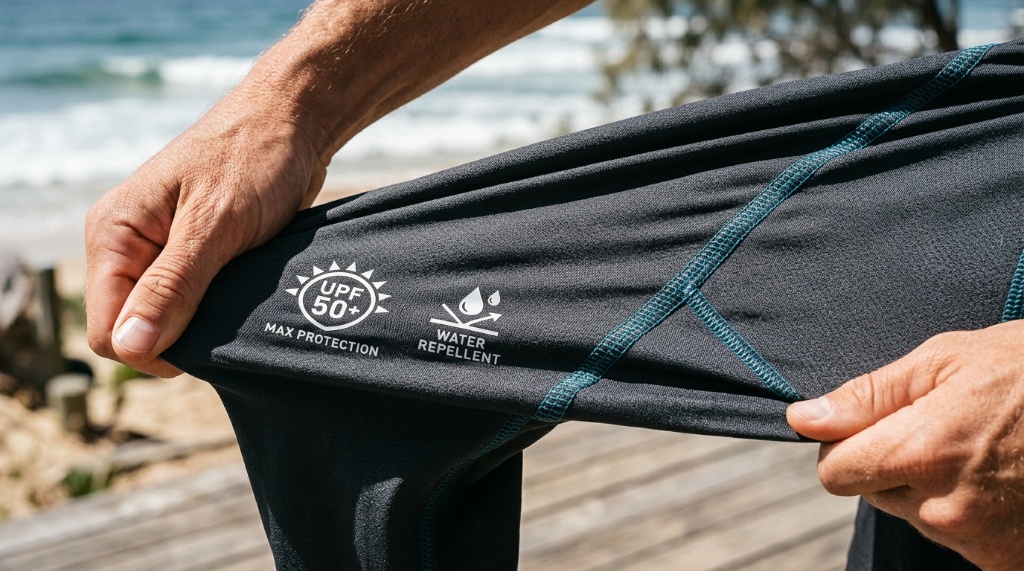
The simplest way to understand the split is to ask what the garment has to survive. Surf apparel is built for immersion, movement, and repeated saltwater exposure. Beachwear is built for walking on sand, sitting on a towel, and looking good in photos. Those two jobs pull design in opposite directions.
When prepping your gear for a day out on the waves, remember to check your equipment setup as well, especially protect your surfboard fins from damage before hitting heavy shore breaks.
Fabric and drying behavior
Surf apparel uses synthetic fibers — nylon, polyester, elastane, and in some cases neoprene — because they shed water quickly, resist salt and chlorine breakdown, and stay lightweight when soaked. A cotton t-shirt can hold several times its weight in water, becomes heavy and clingy, and takes hours to dry in humid coastal air. That’s why you rarely see cotton in boardshorts or rash guards.
Fit and movement
Surf gear fits close to the body on purpose. Rash guards and surf tops reduce drag, prevent chafing against a board, and stay in place during duck dives and wipeouts. Loose beachwear — flowy dresses, baggy tanks, boardwalk shorts — moves freely on land but rides up, twists, or catches water in the surf zone.
Hardware and construction
Zippers on surf apparel are usually corrosion-resistant and often hidden or minimal to avoid catching on a board. Boardshorts use a fixed waist with a tie or a secure drawstring rather than a loose elastic band that can slip during a wipeout. Flatlock or glued seams reduce chafing. Beachwear can afford decorative zippers, metal buckles, and loose waistbands because those aren’t stressed the same way.
Sun and skin protection
Many surf garments carry a UPF rating because surfers spend hours in direct sun with reflected glare off the water. Regular beachwear sometimes has UPF, but it’s rarely a design priority, and a wet cotton shirt offers far less protection than a dry one. This is a meaningful difference if you’re out for a long session rather than a quick swim.
A Side-by-Side Comparison
The table below breaks down the practical differences so you can see where each category wins and where it falls short.
| Factor | Surf Apparel | Regular Beachwear |
|---|---|---|
| Primary fabric | Nylon, polyester, elastane, neoprene | Cotton, linen, rayon, blends |
| Drying speed | Fast (minutes to an hour) | Slow (hours, especially cotton) |
| Fit | Snug, movement-focused | Loose, comfort-focused |
| Water behavior | Low drag, sheds water | Absorbs water, gets heavy |
| Sun protection | Often UPF-rated | Rarely rated, varies widely |
| Hardware | Corrosion-resistant, minimal | Decorative, sometimes metal |
| Best use | Surfing, swimming, long water sessions | Lounging, walking, casual beach days |
| Typical cost | Higher per item, built to last | Wide range, often cheaper |
Why Surf-Specific Accessories Exist at All
Some surf apparel doesn’t have a beachwear equivalent because it solves a problem that only exists around surfing. The surf poncho is the clearest example.
What a surf poncho actually does
A surf poncho is a hooded, oversized towel garment you pull over your head after a session. It lets you change out of a wetsuit or wet swimwear in public without exposing yourself, and it doubles as a drying layer while you stash your board and gear. A regular beach towel can’t do that — it requires two hands, doesn’t stay on, and leaves you exposed the moment you try to move.
Where the Sun Cube poncho fits
The Sun Cube surf poncho is a good example of how surf-specific design differs from generic beach towels or robes. It’s cut for coverage and quick drying, with a hood for hair and head warmth after cold water sessions, and it’s sized to let you change underneath it comfortably. That combination of portability, privacy, and drying function is why it belongs in the surf apparel category rather than the beachwear one. If you want the full breakdown of its construction, materials, and real-world use cases, the linked review above covers it in detail.
Other surf-specific pieces
- Rash guards: Tight-fitting, quick-dry tops for sun and chafe protection under a wetsuit or alone in warm water.
- Boardshorts: Fixed-waist, quick-dry shorts with secure closures built to stay on through wipeouts.
- Wetsuit booties and gloves: Neoprene accessories with no beachwear counterpart.
- Changing mats and dry bags: Gear that protects your clothes and car from wet, sandy equipment.
When Beachwear Is Actually the Better Choice
Surf apparel isn’t automatically the right pick. If your day involves more sand than water, regular beachwear often wins.
A linen shirt and cotton shorts are more comfortable for a beach barbecue, a walk along the shore, or a full day of lounging. They breathe better in dry heat, look more relaxed, and cost less. The trade-off is that they’ll soak up water, dry slowly, and offer little protection if you get caught in a strong shorebreak.
A practical rule: match the garment to the time you’ll spend actually in the water. Under 15 minutes of light wading — beachwear is fine. An hour or more of swimming, surfing, or repeated immersion — surf apparel is the better call.
Common Mistakes People Make
- Surfing in cotton. A cotton t-shirt or tank gets heavy, clings, causes chafing, and offers little sun protection once wet.
- Wearing fashion boardshorts in the water. Decorative boardwalk shorts without a secure waist tie can slip during a wipeout.
- Assuming all rash guards are equal. Some are loose “swim shirts” that ride up; surf rash guards are cut snug for a reason.
- Skipping the poncho or changing towel. Trying to change out of a wetsuit with only a small towel is awkward, cold, and often ends with sand everywhere.
- Ignoring UPF. Long water sessions without rated sun protection lead to burns that a regular beach shirt won’t prevent.
- Using beachwear for cold-water sessions. No cotton or linen layer substitutes for neoprene when the water is genuinely cold.
How to Decide What to Buy
Work through these questions before you spend money:
- How long will you actually be in the water? This is the single biggest factor. Short dips favor beachwear; long sessions favor surf gear.
- What’s the water temperature? Warm water needs rash guards and boardshorts; cold water needs a wetsuit, booties, and a warm layer for after.
- Will you be changing outdoors? If yes, a surf poncho or changing towel is worth the cost.
- How much sun exposure will you get? Look for UPF ratings if you’re out for hours.
- How often will you use it? Frequent surfers benefit from buying purpose-built gear once; occasional beachgoers can often make do with what they own.
Frequently Asked Questions
Can I wear regular beachwear while surfing?
You can, but it usually performs poorly. Cotton absorbs water and gets heavy, loose clothing causes drag and chafing, and decorative hardware can catch on a board. Boardshorts and rash guards exist specifically to avoid these problems.
Is a surf poncho just a beach towel with a hood?
No. A surf poncho is a garment, not a flat towel. It stays on your body hands-free, provides full coverage for changing, and often uses quick-dry towel fabric designed for repeated wet use.
Do I need UPF-rated clothing for the beach?
Not always, but it helps for long exposures. If you’re in the sun for hours — especially on or near water where glare increases UV exposure — UPF-rated surf apparel offers more reliable protection than standard beachwear.
What’s the main difference between a rash guard and a regular swim shirt?
Fit and purpose. Rash guards are cut snug to reduce drag and chafing during board sports. Swim shirts are usually looser, designed for casual swimming and sun coverage rather than performance in the surf.
Are surf apparel brands worth the higher price?
It depends on use. For frequent surfers, purpose-built gear lasts longer, performs better, and reduces problems like chafing and sunburn. For occasional beachgoers, standard beachwear is often good enough.
Can I use a surf poncho as everyday beachwear?
Yes, many people do. It works well as a cover-up after swimming, a warm layer after a cold session, or a quick-dry robe at the beach. It’s just a piece that started in surf culture rather than fashion beachwear.
Conclusion
Surf apparel and regular beachwear overlap in looks but not in function. Surf gear is engineered for immersion, movement, and sun exposure; beachwear is built for comfort and style on land. The smart move is to match the garment to how much time you’ll actually spend in the water. If you’re surfing or swimming for hours, invest in purpose-built pieces — including accessories like a surf poncho that solve problems towels can’t. If you’re mostly lounging, beachwear is perfectly fine. Choose based on your day, not the label on the rack.
