
You are standing in the aisle of a tackle shop, staring at a wall of shiny metal cylinders, and suddenly feel completely lost. Spinning reels, baitcasters, spincasts—it sounds like a foreign language. You came here looking for fishing reels for beginners, but now you are overwhelmed by options, gear ratios, and price tags. You are not alone. Every angler hits this moment of confusion. The problem is that choosing the wrong reel can turn a relaxing day on the water into a frustrating tangle of line and lost fish. The solution is simpler than you think. By matching the reel type to your actual experience level, and following a clear fishing reel buying guide, you can skip the guesswork and get straight to catching fish. This guide will break down exactly which reel fits your current skill set, your target species, and your budget so you can fish with confidence from day one
What Are the Main Types of Fishing Reels?
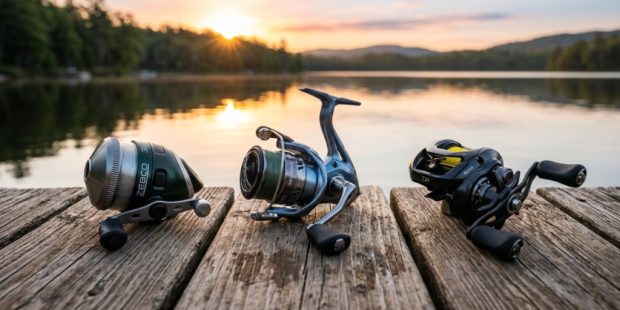
There are three primary reel types that cover the vast majority of freshwater and light saltwater fishing. Spinning reels, baitcasting reels, and spincast reels. Each one serves a different purpose and suits a different experience level. Understanding these three categories is the first step in any reliable fishing reel buying guide.
Spinning Reels
Spinning reels hang underneath the rod. The line spool is stationary, and a metal bail arm wraps the line around it during the retrieve. This design makes casting light lures easy and minimizes tangles. Spinning reels are the most versatile option for beginners because they handle a wide range of fishing situations without requiring advanced technique.
Baitcasting Reels
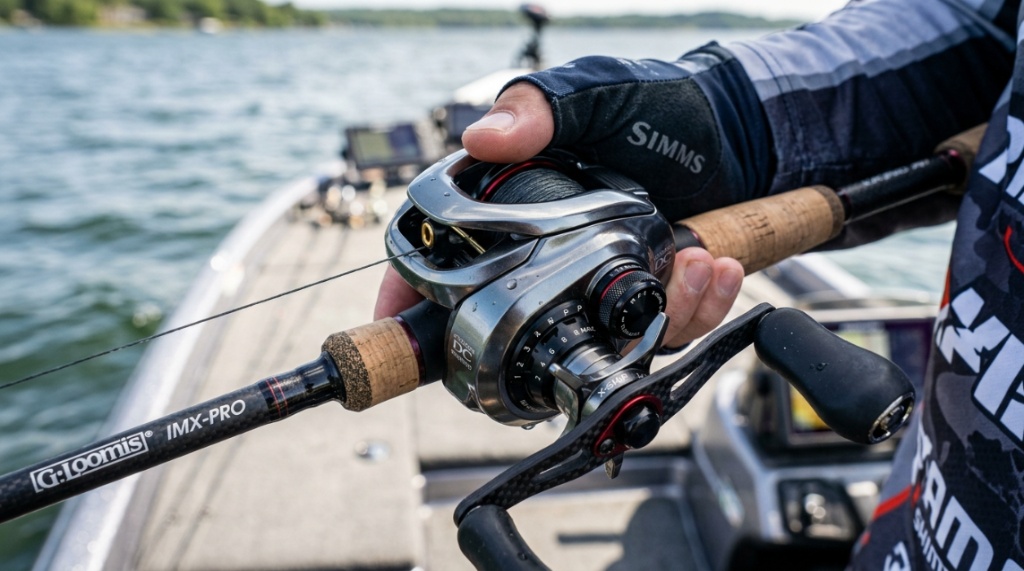
Baitcasting reels sit on top of the rod. The spool spins during the cast, which gives you more control and accuracy but also creates a higher risk of backlash—a tangled mess often called a “bird’s nest.” These reels excel at heavy cover fishing, flipping, and pitching. They require practice and proper thumb control.
Spincast Reels
Spincast reels are the closed-face reels often seen on children’s fishing combos. A push-button mechanism releases the line. They are extremely simple to operate but offer limited casting distance and accuracy. They work well for absolute beginners or casual pond fishing but quickly become limiting as skills improve.
Why Are Spinning Reels Best for Beginners?
Spinning reels are the safest and most forgiving choice for new anglers. They virtually eliminate the risk of backlash, cast light lures with ease, and require minimal manual dexterity to operate. According to nearly every fishing reel buying guide, a spinning reel should be your first real investment if you are learning to fish.
Here is why spinning reels dominate the beginner market:
- No backlash: The spool does not rotate during the cast, so you cannot get a bird’s nest.
- Light lure capability: You can cast tiny jigs, trout baits, and panfish rigs that baitcasters cannot handle.
- Easy maintenance: Fewer moving parts and simpler internal mechanisms mean less hassle.
- Forgiving learning curve: You can focus on reading the water and feeling bites rather than fighting your equipment.
A spinning reel between size 2500 and 3000 is the sweet spot for most beginners. It is large enough to handle bass and walleye but balanced enough for trout and panfish. Pair it with a medium-light power rod, and you have a setup that can handle 80 percent of freshwater scenarios.
When Should You Switch to a Baitcasting Reel?
You should consider a baitcasting reel after you have mastered the basics of casting, retrieving, and fighting fish on a spinning reel. The switch usually happens when you start targeting larger species like bass in heavy cover or need pinpoint accuracy for flipping docks and laydowns. Baitcasters thrive in situations where every foot counts.
Signs you are ready for a baitcaster:
- You can cast a spinning reel for hours without tangling the line.
- You understand how to set drag properly based on line strength.
- You want to use heavier lines (12-pound test and above) for frog fishing or jigs.
- You are willing to spend time practicing in an open field before hitting the water.
Do not rush this transition. Many anglers buy a baitcaster too early, get frustrated by backlash, and quit fishing altogether. Take your time. Master the spinning reel first. When you feel limited by the spinning reel’s casting accuracy, that is your signal to move up.
Can a Spincast Reel Be a Good Starting Point?
Yes, but only for very specific situations. A spincast reel works well for teaching children, introducing a friend to fishing for the first time, or casual dock fishing where you expect bluegill and small sunfish. However, it is not a reel you will grow into. If you are an adult looking to seriously pursue fishing as a hobby, skip the spincast and start with a spinning reel.
The limitations of spincast reels become apparent quickly:
- Poor casting distance compared to spinning reels
- Higher line twist and memory issues
- Difficult to set drag precisely
- Limited availability of spare parts and upgrades
Think of a spincast reel as a training wheel. It serves a purpose, but you will want to remove it as soon as you are comfortable balancing on two wheels.
How Do You Match Reel Size to Your Target Species?
Reel size determines how much line the spool holds and how much drag pressure the reel can apply. Matching reel size to your target species prevents you from being under-gunned or over-equipped. A fishing reel buying guide that ignores species matching is incomplete.
| Reel Size (Spinning) | Target Species | Line Capacity (mono) | Drag Range |
|---|---|---|---|
| 1000 – 2000 | Panfish, Trout, Small Bass | 4-6 lb / 100-200 yds | 3-7 lbs |
| 2500 – 3000 | Bass, Walleye, Catfish, Pike | 8-12 lb / 150-200 yds | 10-15 lbs |
| 4000 – 5000 | Salmon, Steelhead, Redfish | 12-20 lb / 200-250 yds | 15-25 lbs |
| 6000+ | Musky, Tarpon, Big Catfish | 20-30 lb / 250+ yds | 25-40 lbs |
If you fish for multiple species, a size 3000 spinning reel is the most versatile all-rounder. It handles bass fishing in the morning and can switch to trout fishing in the afternoon with a simple line change.
What Gear Ratio Should You Choose?
Gear ratio measures how many times the spool rotates per turn of the handle. A higher gear ratio means faster line retrieval. For beginners, a medium gear ratio between 5.2:1 and 6.4:1 is the safest choice. It offers enough speed for most techniques without sacrificing torque for fighting larger fish.
Here is a simple breakdown:
- Low gear (4.0:1 to 5.0:1): Best for deep cranking, big swimbaits, and fighting heavy fish. Slow retrieve but high power.
- Medium gear (5.2:1 to 6.4:1): The all-purpose range. Works for jigs, soft plastics, spinnerbaits, and live bait fishing.
- High gear (6.5:1 to 8.0:1): Great for topwater walking baits, skipping docks, and quick retrieves. Less torque for big fish.
When you are starting, you do not need a specialized high-speed reel. A medium gear ratio gives you the flexibility to try different techniques without needing to buy a second reel immediately.
Which Features Matter Most for a Beginner Reel?
Focus on three things: smooth drag, corrosion resistance, and a comfortable handle. All other features are secondary. When you look at fishing reels for beginners fishing reel buying guide, the best options prioritize durability and ease of use over flashy specifications.
Essential features to look for:
- Front drag system: More reliable and smoother than rear drag. Easier to adjust while fighting a fish.
- Aluminum spool: Lighter and more durable than graphite. Reduces fatigue during long fishing sessions.
- Stainless steel bearings: At least 3-4 bearings. More bearings do not always mean smoother, but quality bearings matter.
- Rubber or EVA handle knob: Better grip than hard plastic, especially when your hands are wet.
- Anti-reverse clutch: Ensures the handle does not spin backward when a fish pulls the line.
Avoid reels with excessive “bling” like gold plating or unnecessary weight. Beginners often mistake expensive cosmetic features for performance. Spend your money on mechanical quality instead.
How Much Should You Spend on Your First Reel?
Your first reel should cost between $50 and $100. This price range offers the best balance of quality and value. Reels under $30 often use cheap plastic gears that fail after a few trips. Reels over $150 include features like carbon fiber drags and titanium coatings that beginners do not need yet.
Here is what you get at different price points:
- $20 – $40: Basic reels with plastic bodies and inconsistent drag. Workable but frustrating. Best for occasional use only.
- $50 – $100: Aluminum bodies, multiple stainless bearings, smooth graphite or carbon drag. Reliable for years of regular use.
- $100 – $150: High-end features like magnesium bodies, sealed bearings, and extremely smooth drag. Great if you know you will fish frequently.
- $150+: Premium performance for tournament anglers. Beginners get no real benefit from this tier.
Stick to reputable brands like Daiwa, Shimano, Penn, and Abu Garcia. These manufacturers have decades of engineering experience and offer reliable warranty support.
Is a Combo Setup Better Than Buying Separately?
For beginners, yes. A rod and reel combo is almost always the better choice. Combos are pre-balanced by the manufacturer, meaning the weight distribution is optimized for casting comfort. You also save money compared to buying the rod and reel separately.
However, not all combos are created equal. Avoid the $25 combos sold at big-box retailers. They use low-quality components that will fail quickly. Look for combos from the same brands that make quality standalone reels. A $60 to $90 combo from a reputable brand will outperform a $40 combo every time.
When you outgrow the combo, you can keep the reel and upgrade the rod. This approach lets you improve gradually without replacing everything at once.
How Do You Maintain Your Reel for Long Life?
Fishing reels are mechanical devices that need basic care. Neglecting maintenance is the fastest way to ruin a good reel. Follow these steps after every fishing trip:
- Rinse the reel with fresh water, especially if you fish in saltwater or muddy lakes.
- Dry the reel with a soft cloth. Do not use high-pressure water near the bearings.
- Apply one drop of reel oil to the spool shaft and handle pivot points every 3-5 trips.
- Grease the internal gears once per season or after heavy saltwater use.
- Store the reel in a cool, dry place. Avoid direct sunlight and extreme heat.
A well-maintained $80 reel will outlast a neglected $200 reel. The difference is consistent, simple care.
